
Skip to content
Uganda — a landscape evoking the country, painted illustration
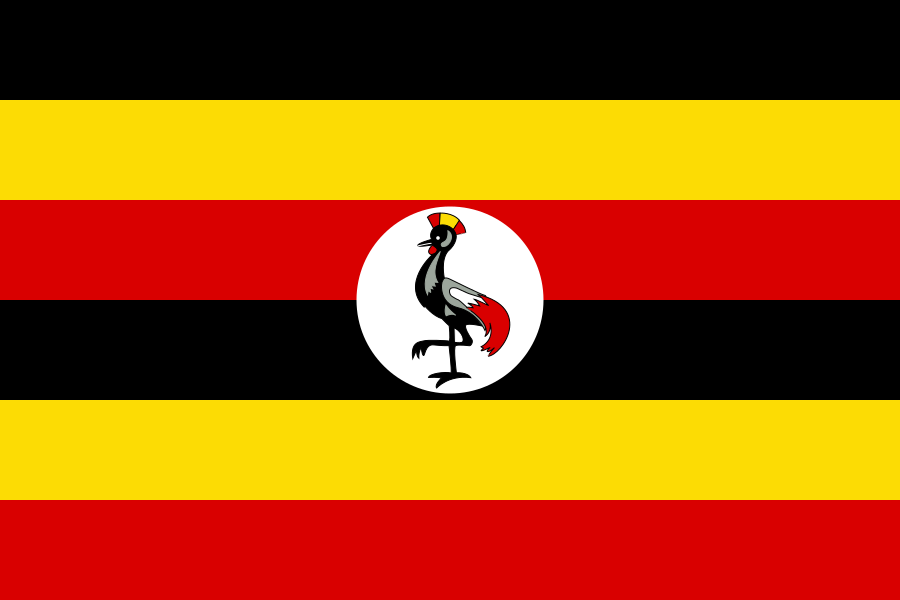
Flag of Uganda

Sub-Saharan Africa

在Uganda退休

Uganda offers an affordable retirement setting, with a cost of living roughly one-third that of the US, stable tropical temperatures year-round, and English as a widely spoken lingua franca. The country's younger population, growing infrastructure, and cultural richness appeal to retirees seeking adventure and deep value for their pension, though healthcare and some services remain modest by developed-world standards.

货币
UGX
主要语言
English / Swahili
人口
51M

一览表

生活成本

比美国便宜约65%

国家物价水平与美国相比 · World Bank (PPP ÷ FX rate), 2025

收入(人均GDP,购买力平价)

$3,273

World Bank, 2024

医疗(全民健保指数)

54/100

全民健康覆盖服务指数 · WHO GHO, 2023

预期寿命

68.5 yrs

World Bank, 2024

生活成本

Uganda is notably cheaper than the US—at roughly 35% of American price levels, your dollar stretches far. Housing is affordable, especially outside Kampala; groceries and local transport are inexpensive; dining out remains cheap if you eat local. Utilities and imported goods cost more, and healthcare (if private) can add up, but overall daily life is very manageable on a modest US retirement income.

Housing (rent for a modest house or apartment) is affordable—a comfortable place in a good Kampala or Entebbe neighborhood costs far less than North American equivalents. Groceries are very cheap if you shop local markets; imported goods (Western foods, wines) are pricier and found in expat supermarkets. Dining out is inexpensive at local restaurants; Western-style cafes and expat-oriented restaurants cost more but remain modest by US standards. Transport (taxis, boda-bodas) is very affordable; hiring a driver part-time or full-time is cheaper than in the West. Utilities (electricity, water, internet) are moderately priced, though power outages and water-quality issues may require backup solutions (generators, water tanks). Healthcare feels like a split—preventive care and routine visits are cheap; private specialist care and hospital stays are higher but still less than in the US. Leisure activities (golf clubs, sports, cultural outings) have modest fees; travel within Uganda and to neighboring countries is affordable.

以国家价格水平(比美国便宜约65%)为基准 — World Bank (PPP ÷ FX rate) 2025。

医疗

Uganda's public healthcare system covers a broad population but with limited resources; the healthcare coverage index sits at 54, indicating moderate gaps in availability and quality. Life expectancy is 68.5 years, reflecting ongoing challenges with infectious disease and maternal health. Most foreign retirees use a mix of public facilities and private clinics or hospitals, especially in Kampala and Entebbe where English-speaking doctors are easier to find. Private health insurance is common among expats and can smooth access to better-equipped private facilities; prescription medications are generally available but quality varies, so verification through a trusted doctor is wise.

Foreign retirees in Uganda typically access care through a combination of public and private channels. The public health system is free or very low-cost but often crowded, understaffed, and equipped with older technology; many expats use it for routine checks but turn to private clinics and hospitals for serious issues. Private healthcare is widely available in Kampala and Entebbe, with English-speaking doctors common in medical practices, private hospitals, and clinics catering to expatriates; quality varies significantly. Most retirees obtain private health insurance (often international policies) to cover private-hospital care and potential evacuation; local insurance is cheaper but may have gaps. Prescription medications are available through pharmacies in cities but quality control is inconsistent—obtaining medications from established pharmaceutical retailers is wise. Wait times at public facilities can stretch hours or days; private clinics are faster but costlier. Preventive care (vaccinations, malaria prophylaxis, regular check-ups) is important and readily available at private clinics. For complex or emergency care beyond Uganda's capacity, medical evacuation to Kenya or South Africa may be necessary and is typically covered by international insurance.

覆盖指数 54/100 (WHO 2023) · 预期寿命 68.5 年 (World Bank 2024). 一般信息,非医学建议。

成本健康气候长寿繁荣

五因素概况

每个轴是一个 0–100 分数,源自上述指标和下述气候常态 — 没有手动设置。参见方法论了解确切公式。

  • 可负担性87
  • 医疗54
  • 气候舒适度94
  • 长寿44
  • 繁荣21

气候与季节

Uganda sits near the equator with warm, consistent temperatures year-round and significant rainfall. In Kampala, January averages 23.5°C and July 21.5°C—both feel warm, with little seasonal temperature swing. Entebbe, slightly warmer and on Lake Victoria, averages 24.3°C in January and 22.8°C in July, with 1,516 mm of annual rain. Jinja, inland near the Nile, is similar at 24°C in January and 22.1°C in July. The country experiences two rainy seasons (roughly March–May and September–November); the driest months are June–August and December–February, though 'dry' is relative—expect 1,397–1,516 mm of annual rainfall across all three cities. Humidity is high year-round, especially near water; mornings can feel cool but afternoons warm quickly.

城市年平均值一月七月年降雨量
Kampala22.4°C23.5°C21.5°C1,397 mm
Entebbe23.5°C24.3°C22.8°C1,516 mm
Jinja23°C24°C22.1°C1,500 mm

Source: NASA POWER (MERRA-2 climatology), long-term climatology.

一年的生活

January in Kampala and Entebbe is warm and relatively dry, with temperatures around 23.5–24.3°C and low rainfall—ideal for exploration, though humidity remains high. February stays similar, marking the tail of the dry season. March marks the start of the long rains; rainfall picks up, afternoons turn thundery, and travel becomes messier, though the landscape greens dramatically. April and May are wetter still, with the heaviest rainfall; outdoor activities shift indoors, and malaria risk rises slightly. June brings the onset of the dry season again, with cooler, drier weather (July averages 21.5–22.8°C across the cities); this is the most pleasant time of year and peak travel season. July and August remain dry and relatively cool, making them ideal for both residents and visitors. September through November see the short rains return; October is particularly wet. December dries out again and is warm—a shoulder season with fewer tourists but still pleasant weather. Overall, the rhythm favors activities in June–August and again in December–February; the rainy seasons (March–May and October–November) are slower, greener, and more introspective, a time when expatriates often travel or focus on indoor hobbies.

城市深度解析

Kampala, the capital, sits on rolling hills with a congested but vibrant city center, heavy traffic, and a mix of modern and ramshackle infrastructure; it draws most expat retirees and has the best healthcare, restaurants, and social scene. Entebbe, on Lake Victoria about an hour south, feels quieter and more pleasant, with a colonial atmosphere, lakeside beauty, and a gentler pace; it suits those wanting calm without total isolation. Jinja, inland to the east near the Nile source, appeals to adventure-minded retirees and is less touristy than the other two but still has services and a growing expat presence. All three have electricity and internet, though reliability varies; water access requires care (filtered or bottled water is standard for foreigners).

退休签证途径

无专门退休签证

Uganda's residence permit system may be available to retirees who meet the immigration authority's criteria, typically based on proof of income and financial self-sufficiency. You'll need to demonstrate the exact threshold (which varies; verify the current requirement with the immigration authority), a police clearance from your home country, and a medical certificate. Applications begin at a Ugandan embassy or consulate in your home country. If your entry visa is granted, you convert it to a residence permit at the Immigration office in Uganda, usually valid for a year and renewable. The full process from application to permit can take several weeks to a few months. Check your nearest Ugandan embassy or consulate and Uganda's official government immigration portal for the latest requirements and fees.

逐步说明

Begin by gathering proof of financial self-sufficiency (verify the current income threshold with the Ugandan immigration authority), a valid passport, a police clearance certificate from your home country, and a medical certificate from an approved clinic. Contact the Ugandan embassy or consulate nearest you and request the residence permit application forms and checklist. Submit your application, paying the required fee, and attend any interviews or biometrics appointments the embassy requests. Once your entry visa is granted, travel to Uganda and report to the Immigration office (typically in Kampala) to convert your visa into a residence permit, a process that usually takes a few weeks. Your first permit is typically issued for one year; you will need to renew it on schedule if you wish to remain. Throughout, keep copies of all documents and receipts. Visit the official Ugandan government immigration portal and your nearest consulate for the most current requirements and timelines.

已验证的官方来源: www.immigration.go.ug

由官方资源草拟的AI内容 · 待人工审核 · 草拟于 2026-07

税务

Uganda taxes residents on worldwide income, but the definition of 'resident' and the rate structure depend on your length of stay and citizenship. Foreign nationals living in Uganda are typically subject to income tax on Ugandan-sourced income; how your retirement income (from overseas pensions, investments, or rental income) is taxed depends on bilateral tax treaties and your specific situation. Many retirees use non-resident status initially if they don't intend to stay more than part of the year. Tax law and treaty provisions shift, and compliance can be complex—you should consult a cross-border tax professional familiar with US–Uganda taxation before settling.

安全与旅游警告

Uganda is generally welcoming and stable, especially in the main cities where expat retirees congregate. Kampala and Entebbe see regular expat presence and functioning infrastructure, though petty theft and scams do occur in crowded areas; common-sense precautions (avoiding flashy displays, using registered taxis, staying in established neighborhoods) are sensible. Road conditions and driving standards differ markedly from North America; medical emergencies can require evacuation to Kenya or South Africa if serious. Health hazards include malaria, dengue, and typhoid—preventive measures (antimalarial prophylaxis, vaccinations, insect protection) are standard. Check your government's current travel advisory for Uganda before deciding, as the picture can shift.

在这里退休是什么样的

Retirement in Uganda feels slower and more social than many Western countries. Expats tend to cluster in Kampala and Entebbe, creating informal communities of like-minded foreigners; church, clubs, and volunteer work are common anchors. English is widely spoken in cities and among educated Ugandans, easing daily life, though learning basic Swahili phrases is appreciated. Getting around relies on taxis, boda-bodas (motorcycle taxis), or a hired driver; car ownership is possible but traffic and road conditions require patience. Shopping for familiar foods means visiting expat-oriented supermarkets (pricier) or adapting to local markets (cheaper, more authentic). The pace is relaxed, the landscape lush and dramatic, and the social fabric tight—but bureaucracy can be slow and frustrating, and creature comforts require deliberate sourcing.

通常适合: Retirees with modest pensions, strong health, cultural curiosity, and comfort navigating a developing-world environment who want their money to stretch far and wish to be embedded in a vibrant, youthful community.

常见问题

在Uganda退休要花多少钱?
Uganda的总体生活成本为比美国便宜约65%(World Bank PPP购买力平价水平)。 Uganda is notably cheaper than the US—at roughly 35% of American price levels, your dollar stretches far. Housing is affordable, especially outside Kampala; groceries and local transport are inexpensive; dining out remains cheap if you eat local.
Uganda的医疗保健如何?
Uganda在WHO全民医疗保障指数上得分为54/100。 Uganda's public healthcare system covers a broad population but with limited resources; the healthcare coverage index sits at 54, indicating moderate gaps in availability and quality. Life expectancy is 68.5 years, reflecting ongoing challenges with infectious disease and maternal health.
Uganda的气候如何?
Uganda全年平均气温为22.4°C,范围从21.4°C到24.3°C(NASA POWER常年数据)。 Uganda sits near the equator with warm, consistent temperatures year-round and significant rainfall. In Kampala, January averages 23.5°C and July 21.5°C—both feel warm, with little seasonal temperature swing.
Uganda提供什么退休或长期居留签证?
Uganda does not offer a dedicated retirement visa program. Visitors typically enter on a standard tourist visa (often 90 days on arrival), and long-stay residence requires either securing local sponsorship (through employment, family, or business) or applying for a residence permit through the immigration authority. Applicants should consult the Uganda Immigration directorate and their nearest Ugandan embassy or consulate, as requirements and renewal pathways can be complex and subject to change.
Uganda对退休人士安全吗?
Before moving, review your government's current travel advisory for Uganda to assess security, health risks, and any restrictions relevant to long-term residence.
如果我在Uganda退休,我需要缴税吗?
Uganda taxes residents on worldwide income; consult a qualified tax advisor in both your home country and Uganda to understand your obligations and any tax treaty benefits.
本概况是研究辅助工具,不构成移民、税务或财务建议。数据为国家级别,附带来源和年份;签证和生活方式摘要由AI从官方页面草拟,待人工审核。在采取行动前,请务必核实官方政府来源和具有资质的专业人士的信息。