
Skip to content
Kyrgyzstan — a landscape evoking the country, painted illustration
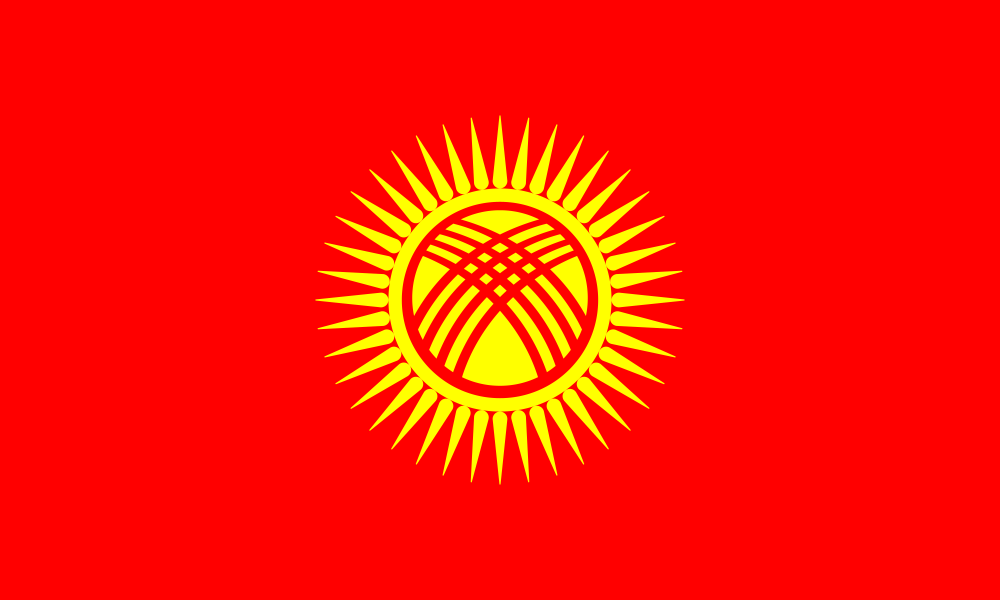
Flag of Kyrgyzstan

Central Asia

在Kyrgyzstan退休

Kyrgyzstan offers a distinctly affordable and culturally rich retirement in Central Asia, with a mild annual climate averaging 13.8°C and life expectancy of 72.4 years. The cost of living is substantially lower than the US, and the dramatic mountain landscapes and welcoming communities appeal to retirees seeking adventure over conventional resort comforts. Healthcare coverage is moderate and varies; serious medical needs may require travel to regional hubs.

货币
KGS
主要语言
Kyrgyz / Russian
人口
7M

一览表

生活成本

比美国便宜约67%

国家物价水平与美国相比 · World Bank (PPP ÷ FX rate), 2025

收入(人均GDP,购买力平价)

$8,012

World Bank, 2024

医疗(全民健保指数)

74/100

全民健康覆盖服务指数 · WHO GHO, 2023

预期寿命

72.4 yrs

World Bank, 2024

生活成本

Kyrgyzstan is noticeably cheaper than the US—roughly one-third the price level—making it genuinely affordable for retirees on modest incomes. Housing is the biggest bargain, especially outside the capital; food, local transport, and utilities are all inexpensive. Dining out and imported goods cost more, and fuel and some services can be unpredictable, but overall your dollars stretch far.

Housing is the biggest budget win—rents for a modest apartment are very affordable, especially outside Bishkek, and utilities (heating, water, electricity) are inexpensive compared to the West. Groceries and fresh produce are cheap, especially local goods and seasonal items; imported foods and Western brands cost much more. Dining out is inexpensive at local teahouses and restaurants; Western cafés in the capital are pricier. Local transport (marshrutka, metro in Bishkek, taxis) is very cheap; petrol and private car ownership are more expensive relative to local wages. Healthcare varies: public care is minimal cost, private clinics and insurance are affordable by Western standards but higher than local wages. Utilities like internet and phone are cheap. Leisure and entertainment—mountain guides, skiing, trekking—are inexpensive, as are cultural activities and gym memberships. Imported wines and spirits cost more; local beer and vodka are cheap. Overall, the main savings are housing, food, and transport; the biggest surprises for expat budgets are often unpredictable costs (car repairs, visa renewals, medical emergencies) and the occasional imported good.

以国家价格水平(比美国便宜约67%)为基准 — World Bank (PPP ÷ FX rate) 2025。

医疗

Kyrgyzstan has a mixed public-private healthcare system with moderate coverage (indexed at 74). Life expectancy stands at 72.4 years, suggesting adequate basic care. The public system exists but is underfunded; most expatriates and retirees use private clinics in the capital for routine care, often supplemented by private health insurance. Medications are available but quality and supply can be inconsistent outside major cities. Many older expats combine public care for emergencies with private insurance and periodic medical tourism to Turkey or Thailand for major procedures.

As a foreign retiree in Kyrgyzstan, you can access both public and private healthcare. The public system is free or very low-cost but underfunded, with equipment and medications sometimes in short supply and long waits; it is adequate for emergencies and chronic disease management but not for complex procedures. Most expatriates and retirees rely on private clinics, primarily in Bishkek, where doctors are often trained in Russia or the Soviet system and may speak Russian and some English. Private insurance (available through local and international providers) is common and relatively affordable; it covers outpatient and inpatient care and often includes evacuation to Turkey or Kazakhstan for serious illness. Finding English-speaking doctors requires networking within the expat community or asking your embassy; your insurance provider can usually arrange referrals. Prescription medications are available in pharmacies, particularly in the capital, though availability of specific drugs can be unpredictable; many retirees bring a stock of regular medications from home. Dental and routine care are inexpensive and decent in private clinics. For serious or specialist care—surgery, cardiology, oncology—many retirees travel to Turkey, Kazakhstan, or Thailand. Wait times at private clinics are short; public system waits can be long and bureaucratic. Overall, if you have private insurance, manage your medications carefully, and maintain networks with other expats and your embassy, you can receive adequate routine and preventive care, though serious illness may require travel.

覆盖指数 74/100 (WHO 2023) · 预期寿命 72.4 年 (World Bank 2024). 一般信息,非医学建议。

成本健康气候长寿繁荣

五因素概况

每个轴是一个 0–100 分数,源自上述指标和下述气候常态 — 没有手动设置。参见方法论了解确切公式。

  • 可负担性89
  • 医疗74
  • 气候舒适度61
  • 长寿57
  • 繁荣39

气候与季节

Kyrgyzstan has a continental climate with cold, dry winters and warm, dry summers. In Bishkek (the capital, in the north), January averages 0.6°C and July 27.6°C, with annual precipitation around 387mm—expect clear, crisp winters with occasional snow and hot, sunny summers. Osh, in the south, is slightly warmer (January 1.7°C, July 27.6°C) and drier (215mm annually), making it more pleasant in winter but equally hot in summer. Karakol, in the high-altitude lake region, is much cooler year-round (January −8.7°C, July 16.7°C) with moderate precipitation (366mm), creating long, harsh winters and brief, mild summers. Spring and autumn are short but can be dramatic. For retirees, the southern valleys offer gentler winters, while the capital provides more services and the lake region appeals to those seeking cooler refuges in summer.

城市年平均值一月七月年降雨量
Bishkek13.8°C0.6°C27.6°C387 mm
Osh14.4°C1.7°C27.6°C215 mm
Karakol5°C-8.7°C16.7°C366 mm

Source: NASA POWER (MERRA-2 climatology), long-term climatology.

一年的生活

In Bishkek, winter (January around 0.6°C) is cold and dry, with occasional snow and grey skies; heating bills rise, but outdoor activity shifts to occasional sunny days and ice skating. Spring (April–May) is brief and unpredictable, with mud and sudden warm days; locals prepare gardens and plan travel. Summer (July around 27.6°C) is hot and dry, perfect for mountain trips and outdoor dining; many retirees escape to cooler zones or travel regionally. Autumn (September–October) is pleasant and clear, a shoulder season ideal for trekking before winter snow; harvest season brings fresh produce. In Osh, winter (January around 1.7°C) is milder than the capital, with less snow, making it more comfortable for those avoiding harsh cold; summers are equally hot (July 27.6°C). In Karakol, winter (January around −8.7°C) is severe, with heavy snow and limited access; only the hardy stay year-round. Summer (July 16.7°C) is brief and mild, perfect for lake activities and mountain hiking. For most retirees, the rhythm follows the seasons: Bishkek and Osh are livable year-round but require winter adjustment; Karakol is a summer retreat. Spring and autumn are the best shoulder seasons for travel and exploration; summer heat sends many into the mountains or neighbouring countries; winter is quiet and introspective, with low costs and tight expat community bonds.

城市深度解析

Bishkek, the capital in the north, is a Soviet-era city with wide avenues, parks, and a small but active expat community; it offers the most services, healthcare, and cultural activity, though it lacks the vibrancy of major regional hubs. Osh, in the Fergana Valley in the south, is older, more traditionally Islamic, and feels more authentically Central Asian; it's warmer in winter and drier, with less expat infrastructure but lower costs and a stronger sense of place. Karakol, on the shores of Lake Issyk-Kul in the east, is a mountain resort town suited to outdoor lovers and those seeking cooler summers and solitude; winters are harsh and services are minimal, making it a seasonal or adventure-focused choice rather than a primary base for retirees seeking reliable amenities.

退休签证途径

无专门退休签证

Kyrgyzstan welcomes foreign retirees through its residence permit system, which typically requires proof of stable income or savings (verify the current threshold with your nearest embassy, as figures change). The process involves applying at a Kyrgyz diplomatic mission in your home country, submitting medical and police clearance, receiving an entry visa, then converting it to a one-year residence permit in-country at the State Migration Service. Renewal is straightforward for those who maintain their financial standing. The country does not yet offer a formal 'digital nomad' or 'retirement visa' like some neighbours, but the standard residence route is accessible and relatively low-friction. Consult your nearest Kyrgyz embassy or consulate and the State Migration Service's official portal for current income thresholds, processing times, and document requirements.

逐步说明

To retire in Kyrgyzstan: (1) Gather documents—passport, police clearance from your home country, medical certificate (often obtained locally), and proof of stable income or savings (verify the current threshold at your nearest Kyrgyz embassy). (2) Apply for a residence visa at the Kyrgyz embassy or consulate in your home country, submitting the above documents and completing the application form. (3) Attend your appointment for biometric data and an interview; processing typically takes weeks to a few months. (4) Receive your entry visa and travel to Kyrgyzstan. (5) Within days of arrival, visit the State Migration Service in Bishkek (or the regional office in your city) to register your arrival and apply to convert your entry visa to a one-year residence permit. (6) Attend any follow-up appointments for biometrics or medical checks in-country. (7) Receive your residence permit, valid for one year; begin planning renewal at least two months before expiry, typically by proving you still meet the income or savings requirement. Timeline from first application to residence permit in hand is usually two to four months. For current thresholds, document checklists, and timelines, consult the State Migration Service's official portal and your nearest Kyrgyz embassy or consulate.

已验证的官方来源: www.evisa.e-gov.kg

由官方资源草拟的AI内容 · 待人工审核 · 草拟于 2026-07

税务

Kyrgyzstan generally does not tax foreign-source income for residents who have not been in the country for a full tax year, and retirees receiving overseas pensions often face minimal local tax if structured properly. However, any income earned within Kyrgyzstan is taxable, and tax treaties vary by your home country. The tax environment is relatively light but opaque for foreigners, and local rules change. You should engage a cross-border tax professional who understands both Kyrgyz law and your home country's treaty obligations before relocating; misunderstanding can create unexpected liability.

安全与旅游警告

Kyrgyzstan is generally safe for expats and retirees in the main cities, with low violent crime and a welcoming attitude toward foreigners. Petty theft and scams exist, as in any developing country, and you should exercise normal urban caution—avoid displaying valuables, use registered taxis, and stay aware of your surroundings. The political situation is stable but regional border tensions with Tajikistan have occasionally flared; stay informed and avoid remote border areas. Healthcare standards are below Western norms, and winters can be harsh, so plan ahead for medical needs and winter preparedness. Check your own government's current travel advisory for the latest safety and security picture.

在这里退休是什么样的

Life in Kyrgyzstan as a retiree is slower-paced and more austere than in the West, but rich in natural beauty and low cost. Bishkek has a small, tight-knit expat community and some cultural life, though it feels provincial compared to major cities. Russian and Kyrgyz are the daily languages; English is rare outside tourism zones, so learning basic Russian phrases is practical. Getting around the capital is manageable by marshrutka (shared minibus) or taxi; longer journeys require patience and planning. Shopping, banking, and bureaucracy can be slower and less reliable than you're used to. The rhythm is more relaxed, seasons are dramatic, and outdoor recreation—trekking, skiing, lake visits—is accessible and inexpensive. Social life often revolves around expat networks and family connections; making local friendships takes time and language effort. It suits retirees seeking simplicity, nature, and a tight budget over comfort and convenience.

通常适合: Retirees comfortable with modest infrastructure and cultural immersion who prioritize low costs and natural beauty over Western amenities, and who have secure foreign income or pensions.

常见问题

在Kyrgyzstan退休要花多少钱?
Kyrgyzstan的总体生活成本为比美国便宜约67%(World Bank PPP购买力平价水平)。 Kyrgyzstan is noticeably cheaper than the US—roughly one-third the price level—making it genuinely affordable for retirees on modest incomes. Housing is the biggest bargain, especially outside the capital; food, local transport, and utilities are all inexpensive.
Kyrgyzstan的医疗保健如何?
Kyrgyzstan在WHO全民医疗保障指数上得分为74/100。 Kyrgyzstan has a mixed public-private healthcare system with moderate coverage (indexed at 74). Life expectancy stands at 72.4 years, suggesting adequate basic care.
Kyrgyzstan的气候如何?
Kyrgyzstan全年平均气温为13.8°C,范围从0.6°C到27.6°C(NASA POWER常年数据)。 Kyrgyzstan has a continental climate with cold, dry winters and warm, dry summers. In Bishkek (the capital, in the north), January averages 0.6°C and July 27.6°C, with annual precipitation around 387mm—expect clear, crisp winters with occasional snow and hot, sunny summers.
Kyrgyzstan提供什么退休或长期居留签证?
Kyrgyzstan does not offer a formal retirement visa program. Most foreign retirees enter on a standard tourist visa (typically 60 days) and arrange longer stays through visa runs or by applying for a residence permit through the State Registration Office. Requirements and pathways vary and are not well-codified for retirees; you will need to consult the Kyrgyz embassy in your home country or the immigration authority directly, as options and policies shift.
Kyrgyzstan对退休人士安全吗?
Consult your government's official travel advisory for Kyrgyzstan before departure to understand current security and health conditions in your intended area.
如果我在Kyrgyzstan退休,我需要缴税吗?
Foreign residents may face taxation on worldwide or locally-earned income depending on residency status; consult a tax professional familiar with Kyrgyz law and your home country's treaty obligations before relocating.
本概况是研究辅助工具,不构成移民、税务或财务建议。数据为国家级别,附带来源和年份;签证和生活方式摘要由AI从官方页面草拟,待人工审核。在采取行动前,请务必核实官方政府来源和具有资质的专业人士的信息。