South Asia
在India退休
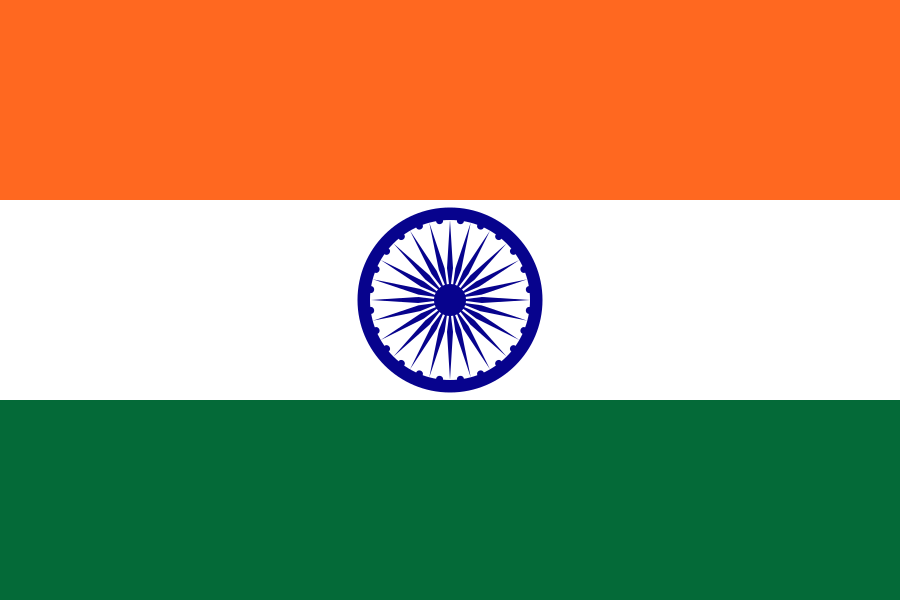
India offers one of the world's lowest costs of living for retirees—at roughly a quarter of US price levels—combined with a warm, year-round climate and a life expectancy near 72 years. The country's public healthcare system reaches most areas, though private care is widely available and affordable; quality varies by region and facility, so careful research of your chosen location is essential.
- 货币
- INR
- 主要语言
- Hindi / English
- 人口
- 1,464M
一览表
数据如何变化
India's economic indicators show strong upward momentum over the period tracked. GDP per capita (PPP) has risen steadily from 4,206 international dollars in 2010 to 11,160 in 2024 — more than doubling in fourteen years, with particularly sharp growth from 2020 onward as the economy recovered from the pandemic. Life expectancy has also climbed from 67.2 years in 2010 to 72.2 in 2024, gaining about half a year per year on average — a sign of improving healthcare, nutrition, and living conditions. Population growth has continued but at a slowing rate, rising from roughly 1.26 billion in 2011 to 1.46 billion in 2025, suggesting demographic stabilization. For a prospective retiree, these trends are encouraging: the country is becoming wealthier, healthier, and more stable, though regional inequality and infrastructure disparities persist.
世界银行的多年数据系列 — 同上指标,随时间变化。
生活成本
India is noticeably cheaper than the US — at roughly 23% of US price levels, your money stretches significantly further. Housing dominates the budget, and you'll find rent varies sharply by city and neighborhood: a modest apartment in a retiree-friendly area costs substantially less than equivalent US housing, though expat-oriented compounds can be pricier. Food is very affordable if you shop locally and eat Indian cuisine; Western groceries and imported goods are markedly dearer. Transport is inexpensive — taxis, auto-rickshaws, and domestic flights are all budget-friendly. Utilities and healthcare through the private sector (which many foreign retirees use) remain economical compared to North America.
Housing is the largest budget item and is notably cheaper than the US, though expat-oriented or central-city apartments cost more than local neighborhoods; a comfortable apartment in a mixed expat-Indian area typically costs a fraction of equivalent US rent. Groceries are very affordable if you shop at local markets and eat Indian food; Western or imported items (cheese, specialty foods, certain breakfast cereals) carry a significant markup. Dining out at local Indian restaurants is extremely inexpensive; mid-range and upscale restaurants are still far cheaper than comparable meals in North America. Transport — taxis, auto-rickshaws, local buses, and domestic flights — is remarkably cheap; owning a car is optional and adds cost. Utilities (electricity, water, internet) are affordable. Healthcare through private insurance and private doctors is cheaper than the US, though premium hospitals and specialized care can be pricier. Leisure — cinema, cultural events, travel within India — is budget-friendly. Overall, a comfortable middle-class retirement in India can cost 60–70% less than in the US, even when accounting for travel back home and private healthcare.
以国家价格水平(比美国便宜约77%)为基准 — World Bank (PPP ÷ FX rate) 2025。
医疗
India's healthcare system has a coverage index of 69, with life expectancy at 72.2 years — respectable for the region, though public facilities can be crowded and variable in quality. Most foreign retirees use a mix of public and private care, relying on private insurance (which is widely available and affordable) to access English-speaking doctors, modern diagnostic equipment, and shorter wait times in private hospitals and clinics. The public system (Ayushman Bharat and state schemes) covers residents but is often overwhelmed; many expats choose private care outright or supplement public access with private top-ups. Prescription medications are affordable, and major cities have well-equipped private hospitals that cater to international patients.
As a foreign retiree in India, you can access both public and private healthcare, though most expats rely primarily on private care for reliability and English-language service. The public system (Ayushman Bharat and state health schemes) theoretically covers all residents, but public hospitals are often crowded, understaffed, and variable in quality — useful for emergencies or if you obtain residency documentation, but not the primary choice for routine care. Private insurance is cheap and widely available; many retirees buy comprehensive plans from companies like Apollo, Cigna, or local providers to access private hospitals and English-speaking doctors. Finding an English-speaking physician is straightforward in major cities — hospital networks maintain directories, and expat communities share referrals. Prescription medications are affordable and available without many restrictions; pharmacies stock both Indian generics and international brands at a fraction of US prices. Wait times in private facilities are minimal compared to public hospitals. However, the quality of care varies by facility and city, so research your chosen location's hospitals in advance, and consider medical tourism-quality private providers if you have complex needs. Dental and vision care are also affordable through private practitioners.
覆盖指数 69/100 (WHO 2023) · 预期寿命 72.2 年 (World Bank 2024). 一般信息,非医学建议。
气候与季节
India's climate varies sharply by region, so your choice of city shapes your year-round experience. New Delhi has a continental climate: January averages 13.6°C (cool, sometimes crisp), July peaks at 32.3°C (hot and dusty before the monsoon), with 751 mm of annual rainfall concentrated in the monsoon season (June–September). Bengaluru is the most temperate major city, with January at 21.1°C and July at 23.5°C, making it pleasantly mild year-round; annual rainfall is 843 mm, spread across monsoon months. Goa, on the coast, has a tropical climate with warm, humid conditions year-round, particularly warm and dry from December to February and hot, humid, and rainy from May to September, with annual rainfall around 836 mm. Most retirees find the cool season (November–February) most comfortable; the pre-monsoon heat (April–May) can be intense in Delhi and the interior, while monsoons bring heavy rain and cooler temperatures across most regions.
| 城市 | 年平均值 | 一月 | 七月 | 年降雨量 |
|---|---|---|---|---|
| New Delhi | 25.6°C | 13.6°C | 32.3°C | 751 mm |
| Bengaluru | 23.7°C | 21.1°C | 23.5°C | 843 mm |
| Goa | 13.3°C | 4°C | 23.3°C | 836 mm |
来源:NASA POWER (MERRA-2 climatology),long-term climatology。
一年的生活
January in New Delhi averages 13.6°C — crisp mornings and cool afternoons, ideal for walking and outdoor activities; this is peak season for tourism and expats. February continues mild and is considered the most pleasant month for most of India. March brings rising heat; Delhi averages around 30°C and the air becomes dusty. April–May are brutally hot, especially in Delhi (peaks near 35–36°C); most active retirees retreat indoors during midday, travel to cooler Bengaluru or hill stations, or slow their pace. June marks the onset of monsoon; rain arrives, temperatures dip, and humidity rises — visually lush but wet. July in Delhi and much of northern India is hot and wet; Bengaluru (averaging 23.5°C) remains temperate, making it a refuge. August continues monsoon conditions; flooding can disrupt travel. September and October see monsoon tail-off; temperatures moderate, and the landscape is verdant. November brings the cool season — the best time to travel and socialize, with temperatures in Delhi dropping to around 20°C. December cools further, approaching January's pattern. In coastal Goa, the rhythm differs: December–February are warm and dry (the tourist peak); May–September are hot, humid, and rainy. Most retirees adjust their activity level with the seasons, hibernating indoors during peak heat and rain, and venturing out during the cool, dry months when social life and travel peak.
城市深度解析
New Delhi, the capital, is bustling and chaotic, with traffic, pollution, and bureaucratic intensity offset by world-class private healthcare, restaurants, and a large expat community; winters (November–February) are pleasant, but summers and pre-monsoon heat are punishing. Bengaluru, the IT hub of southern India, offers a temperate climate year-round (a major draw), a younger vibe, booming tech infrastructure, and growing expat networks; it's cleaner and more orderly than Delhi, though pricier. Goa, on the Arabian Sea coast, is laid-back and touristy, with a strong beach culture, a long-established foreign retiree population, and a relaxed Portuguese-influenced character; it attracts those seeking warmth, simplicity, and coastal living. Each city suits different temperaments: Delhi for those who thrive in intensity and institutional access, Bengaluru for those wanting modernity and mild weather, Goa for those seeking calm, warmth, and community.
退休签证途径
India has a Retirement Visa program for foreign nationals aged 50 and above, though eligibility, income or savings thresholds, and required documentation are set by the government and subject to change. The program generally requires proof of monthly income or liquid assets demonstrating financial independence, along with submission of documents (passport, financial proofs, health certificate, police clearance) to the Indian embassy or consulate in your home country, followed by medical and security checks, entry visa issuance, and conversion to a long-term residence permit in India. The timeline typically spans several months. You'll need to register with local authorities and renew your permit on schedule. Confirm current eligibility criteria, documentation requirements, and thresholds with the official Government of India Ministry of External Affairs portal and your nearest Indian embassy or consulate before planning your application, as rules and bilateral agreements change.
逐步说明
Step 1: Gather documents — valid passport, financial proofs (bank statements, proof of income or liquid assets; verify current thresholds with the official portal), health certificate from a qualified physician, police clearance from your home country, and character references. Step 2: Submit your application to the Indian embassy or consulate in your home country, including the completed visa form, all supporting documents, and relevant fees. Step 3: Attend a biometric and medical appointment at the embassy if required; answer questions about your intent to reside in India. Step 4: Receive your entry visa (valid for typically 1 year). Step 5: Arrive in India and apply for conversion to a long-term residence permit with the local foreigner's regional registration office (FRRO) in your chosen city — this involves further documentation and may take several weeks. Step 6: Renew your residence permit on schedule (typically annually or per the terms of your visa) to maintain continuous legal status. Timelines vary; budget several months from initial submission to arrival. The income or savings threshold for retirement visas must be verified with the current regulations via the official Government of India Ministry of External Affairs portal and your nearest Indian embassy or consulate, as requirements change.
已验证的官方来源: www.mea.gov.in
由官方资源草拟的AI内容 · 待人工审核 · 草拟于 2026-07
税务
India taxes residents on worldwide income if they meet the definition of 'resident' — typically, if you stay in India for 183 days or more in a financial year, or if you have an Indian property, you may be considered resident for tax purposes. Foreign pension income, investment returns, and rental income from outside India are generally taxable if you're a resident. However, India has tax treaties with many countries (including the US) that may allow you to avoid double taxation. Tax residency rules are complex and depend on your specific situation, citizenship, and visa status, so you should consult a cross-border tax professional familiar with India-US (or your home country) tax treaties before settling; they can help you understand your obligations and optimize your tax position.
安全与旅游警告
India is a vast, densely populated country with varying safety levels by city and neighborhood. Major cities frequented by expats — Delhi, Bengaluru, Goa — have significant foreign communities and reasonably good policing in upscale residential areas, though petty theft, scams, and traffic hazards are common concerns. Healthcare infrastructure in cities is adequate, but hygiene and food safety require vigilance (traveler's diarrhea is common). Air quality in Delhi can be poor, especially during winter months, which may affect respiratory health. Consult your government's official travel advisory for the current security and health picture, and talk to your doctor about vaccinations and health precautions well before travel.
在这里退休是什么样的
Retired life in India is unhurried if you settle into the rhythm, with a strong expat community in the major cities providing social outlets, clubs, and familiar amenities. English is widely spoken in cities and among professionals, easing daily communication, though Hindi is the national language and learning basic phrases helps. Getting around is easy and cheap — auto-rickshaws, taxis, and domestic flights connect cities smoothly. The pace is slower than North America, with afternoon rests (or siestas in warmer seasons) common, and a strong emphasis on social and family time. You'll need patience with bureaucracy, infrastructure variation, and the sensory intensity of crowded urban areas, but many retirees find the low cost, warm climate, cultural richness, and welcoming attitude toward long-term foreign residents deeply appealing.
通常适合: Retirees comfortable navigating a complex, crowded environment who prioritize extreme affordability, cultural immersion, and warm winters over predictable infrastructure or minimal bureaucracy.
常见问题
- 在India退休要花多少钱?
- India的总体生活成本为比美国便宜约77%(World Bank PPP购买力平价水平)。 India is noticeably cheaper than the US — at roughly 23% of US price levels, your money stretches significantly further. Housing dominates the budget, and you'll find rent varies sharply by city and neighborhood: a modest apartment in a retiree-friendly area costs substantially less than equivalent US housing, though expat-oriented compounds can be pricier.
- India的医疗保健如何?
- India在WHO全民医疗保障指数上得分为69/100。 India's healthcare system has a coverage index of 69, with life expectancy at 72.2 years — respectable for the region, though public facilities can be crowded and variable in quality. Most foreign retirees use a mix of public and private care, relying on private insurance (which is widely available and affordable) to access English-speaking doctors, modern diagnostic equipment, and shorter wait times in private hospitals and clinics.
- India的气候如何?
- India全年平均气温为25.6°C,范围从13.6°C到35.9°C(NASA POWER常年数据)。 India's climate varies sharply by region, so your choice of city shapes your year-round experience. New Delhi has a continental climate: January averages 13.6°C (cool, sometimes crisp), July peaks at 32.3°C (hot and dusty before the monsoon), with 751 mm of annual rainfall concentrated in the monsoon season (June–September).
- India提供什么退休或长期居留签证?
- India does not offer a dedicated retirement visa. The standard path is to apply for a long-term visa (Tourist, e-Tourist, or Business visa) renewable periodically through Indian consulates, or to explore the India e-Visa for eligible nationalities. No specific passive-income or pension threshold is formally required, but you must demonstrate financial self-sufficiency to immigration authorities.
- India对退休人士安全吗?
- Check your home country's official travel advisory for India before deciding, as safety and health risks vary significantly by region and season.
- 如果我在India退休,我需要缴税吗?
- India taxes worldwide income for residents; consult a cross-border tax professional to understand your liability and any treaties between India and your home country.
接下来在哪里查看
South Asia的更多内容


生活成本相近