
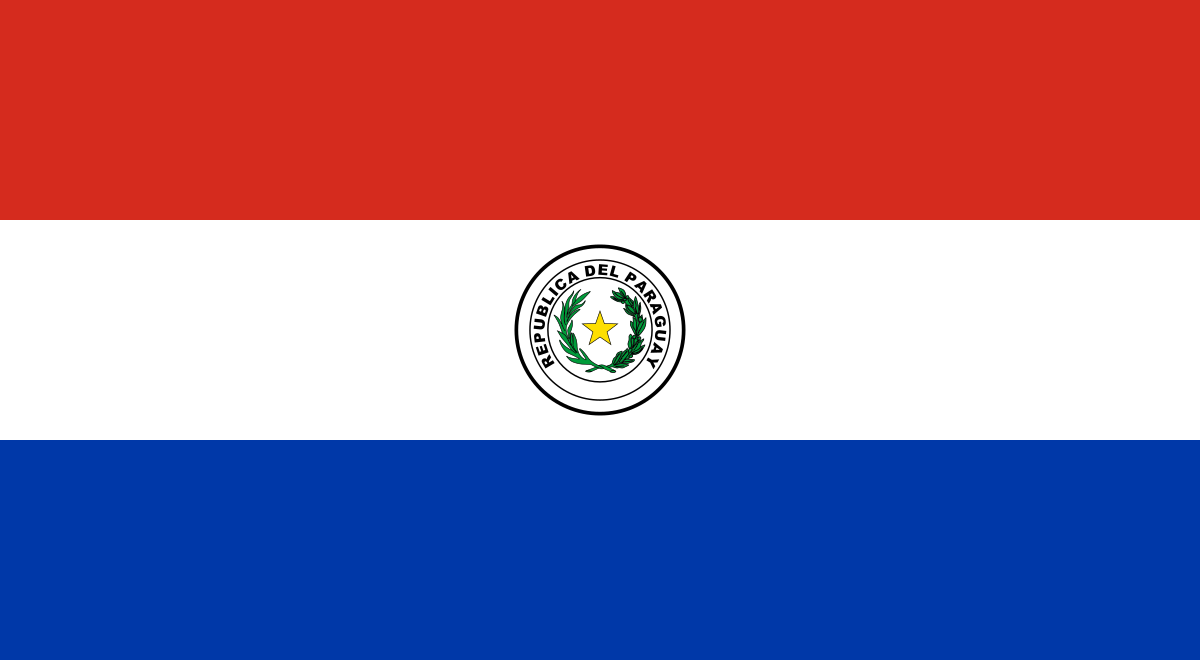
South America
Retire in Paraguay
Paraguay offers one of South America's lowest costs of living—prices run around a third of U.S. levels—alongside a warm, stable climate and reasonable healthcare access. It appeals to retirees seeking affordability and a quieter pace, though it requires more self-reliance and Spanish fluency than some neighboring countries.
- Currency
- PYG
- Main language
- Spanish
- Population
- 7M
At a glance
Cost of living
~65% cheaper than the US
national price level vs the US · World Bank (PPP ÷ FX rate), 2025
How the numbers have moved
Paraguay's economic trajectory over the past 15 years shows encouraging growth. GDP per capita (PPP) rose from 10,893 international dollars in 2010 to 18,524 in 2024—a 70% gain—with consistent upward movement except for small dips during global slowdowns. This reflects rising prosperity and improved living standards. Life expectancy has climbed more modestly but steadily: from 72.6 years in 2010 to 74 in 2024, with a notable dip in 2021 (to 68.1) likely due to COVID-19, followed by recovery. Population has grown from 5.8 million in 2011 to 7.0 million in 2025—steady demographic expansion. These trends suggest a country becoming more prosperous and stable, a positive sign for a retiree seeking growing infrastructure and services.
Multi-year series from the World Bank — the same indicators as above, over time.
Cost of living
Paraguay is noticeably cheaper than the US—at 0.35 times US price levels, your dollar stretches far. Housing is the biggest win: modest apartments and houses rent affordably, especially outside Asunción. Groceries, local transport, and dining at casual restaurants all feel inexpensive. Utilities and healthcare (if you use private clinics) remain low-cost. The main places retirees spend more are imported goods, international flights, and maintaining a car—but overall, a modest US Social Security or pension can support a comfortable life here.
Housing is the major bargain: renting a modest apartment or house outside central Asunción feels cheap; even in the capital, you pay a fraction of US city rents. Groceries for cooking at home are very affordable—local produce, meat, and staples cost far less than in the US—though imported goods (cheese, certain cereals) carry a premium. Dining out at local restaurants is inexpensive; a meal at a casual spot costs very little. Transport is a strength: local buses, taxis, and ride-apps are all low-cost; car ownership and fuel are pricier if you drive. Utilities (electricity, water, internet) are modest. Healthcare leans cheap if you use private clinics and don't need complex procedures; medications are inexpensive. Leisure activities—cinema, museums, outdoor recreation—are affordable. The only categories that bite are imported goods, international airfare, and maintaining a vehicle; everything else supports a comfortable, low-cost retirement.
Anchored to the national price level (~65% cheaper than the US) — World Bank (PPP ÷ FX rate) 2025.
Healthcare
Paraguay's healthcare coverage index stands at 79, and life expectancy is 74 years—solid indicators of a working system. The public health system exists but is patchy; many residents, including retirees, rely on a mix of private clinics and private insurance, which is widely available and affordable. English-speaking doctors are found more readily in Asunción and Ciudad del Este than in smaller towns. A routine private consultation or minor procedure costs a fraction of US prices. Many retirees obtain international health insurance or a local private policy to ensure reliable access to quality care and avoid public-system waits.
As a foreign retiree, you can access both Paraguay's public and private healthcare systems. The public system is theoretically available to residents, but waits are long and facilities are basic outside Asunción; most expat retirees avoid it for routine care. Private clinics and hospitals—especially in Asunción, Ciudad del Este, and Encarnación—offer modern equipment, shorter waits, and English-speaking doctors, particularly in larger cities. Many retirees obtain private health insurance (affordable local policies or international coverage) to ensure reliable access and cover gaps. Prescription medications are widely available and cheap at pharmacies; many drugs sold over-the-counter in Paraguay require prescriptions in the US. Finding an English-speaking GP requires asking your embassy, expat groups, or your hotel; once established with a private doctor, care is straightforward. Life expectancy at 74 years suggests the healthcare system is adequate for managing chronic conditions common in retirement. Budget for private care; it remains very affordable compared to the US, even without insurance.
Coverage index 79/100 (WHO 2023) · life expectancy 74 yrs (World Bank 2024). General information, not medical advice.
The five-factor profile
Each axis is a 0–100 score derived from the sourced indicators above and the climate normals below — nothing is hand-set. See the methodology for the exact formulas.
- Affordability87
- Healthcare79
- Climate comfort92
- Longevity62
- Prosperity56
Climate & seasons
Paraguay sits in the subtropics with warm, humid summers and mild winters. In Asunción, January averages 28.3°C (hot and muggy), while July drops to 16.2°C (cool but not freezing); annual rainfall is 1,474 mm, spread throughout the year. Ciudad del Este (January 27.2°C, July 16.8°C, 1,612 mm annually) is slightly warmer and wetter, near the Iguazu region. Encarnación, the southernmost of the three, is a shade cooler (January 26.6°C, July 14.7°C) and wettest (1,770 mm annually). Expect no real dry season; rains come year-round, heaviest in the southern areas. Summer humidity (November–March) can be intense; many retirees plan outdoor activity for cooler mornings or migrate north during the worst heat.
| City | Annual mean | January | July | Rain / yr |
|---|---|---|---|---|
| Asunción | 22.8°C | 28.3°C | 16.2°C | 1,474 mm |
| Ciudad del Este | 22.7°C | 27.2°C | 16.8°C | 1,612 mm |
| Encarnación | 21°C | 26.6°C | 14.7°C | 1,770 mm |
Source: NASA POWER (MERRA-2 climatology), long-term climatology.
A year in the life
January in Asunción means summer heat and humidity (28.3°C) and afternoon rains; expect indoor afternoons and early-morning walks. February–March continue hot and wet; many retirees minimize midday activity and plan trips to cooler Encarnación. April–May (autumn) bring relief—temperatures moderate and rainfall eases; ideal months for outdoor exploration and travel within Paraguay. June–August are winter: July is cool (16.2°C in Asunción, 14.7°C in Encarnación) but dry; this is the most comfortable season for walking, socializing, and visiting friends. Southern towns like Encarnación feel noticeably fresher than the capital. September–October (spring) warm up again, rains return, and humidity climbs; a shoulder season for activity before the summer heat returns. November–December see rising heat and moisture; some retirees escape to cooler regions or time trips abroad to avoid the December-January peak. The rhythm is shaped by heat and rain rather than dramatic seasonal change; your year tends to cluster activities in the mild, drier winter (June–August) and shoulder months.
The cities, up close
Asunción, the capital on the Paraguay River, is the largest and most cosmopolitan hub—museums, restaurants, expat services, and a lively centre, though traffic and noise can wear thin. Ciudad del Este, near the tri-border (Argentina, Brazil), is bustling and commercial, popular with expats seeking urban energy and proximity to the Iguazu Falls; it's humid and congested but convenient for travel. Encarnación, in the south, is smaller and quieter, with colonial charm and a riverside setting; it appeals to retirees seeking calm over nightlife, and winters there are notably cooler. Each suits different temperaments: Asunción for social engagement, Ciudad del Este for connectedness to the wider region, Encarnación for tranquility.
Retirement-visa path
Paraguay offers a pensioner visa (pensionista) for retirees with stable foreign income. The main route requires proof of a regular monthly pension or income—the threshold has historically been modest, but you must verify the current requirement with the official immigration authority. The process typically takes a few months: you apply at a Paraguayan embassy or consulate in your home country, submit income documentation, undergo police and medical clearance, receive an entry visa, then convert it to a temporary residence permit in-country. After renewal periods (typically annual or multi-year), you may be eligible for permanent residence. Consult the official National Migration Directorate portal and your nearest Paraguayan consulate for current thresholds and timelines—requirements and procedures change.
Step by step
Here is the concrete sequence: (1) Gather proof of regular monthly income or pension from your home country (bank statements, pension letters, etc.) and documents showing your nationality and personal history. (2) Contact the Paraguayan embassy or consulate nearest you and request the pensioner visa application package; verify the current minimum income threshold. (3) Complete the application form and submit it along with your income documentation, passport copy, and any other requested materials to the consulate. (4) The consulate will schedule a medical exam and police background check; complete both as instructed. (5) Once approved, the consulate issues you an entry visa valid for a limited period. (6) Travel to Paraguay and, within the visa's timeframe, visit the National Migration Directorate in-country to convert it to a temporary residence permit. (7) After your permit's validity period (typically 1–3 years), apply for renewal at the migration office; successive renewals may lead to permanent residence. Throughout, verify current thresholds and procedures with the official National Migration Directorate portal and your nearest Paraguayan consulate—requirements and processing times vary.
Verified official source: www.migraciones.gov.py
AI-drafted from official sources · pending human review · drafted 2026-07
Taxes
Paraguay's approach to taxing foreign-source income for residents varies by individual circumstances and residency status; tax residency rules are nuanced, and Paraguay has tax treaties with some countries. You remain liable for US taxes on worldwide income (including Social Security and pension) even while residing abroad. Before relocating, consult a cross-border tax professional who understands both US and Paraguayan law; they can advise on residency, tax filing, and any treaty benefits specific to your situation.
Safety & advisories
Paraguay's everyday safety is moderate and uneven. Asunción and Ciudad del Este have neighbourhoods that are safe for daily activities—shopping, dining, attending community events—but petty theft and robbery do occur in crowded areas and at night, as in most Latin American cities. Violent crime is not typically a threat to retirees who stay alert and avoid known danger zones. Health-wise, mosquito-borne illnesses (dengue, Zika) circulate, especially in warmer months; consult your doctor and official health authorities (such as the CDC or WHO) about current vaccinations and preventive measures before arrival. Consult your home government's official travel advisory for Paraguay for the most current safety picture and any alerts.
What retiring here is like
Retirement in Paraguay feels slower and more intimate than in a US city. Asunción has urban buzz—cafés, cultural events, expat networks—while smaller towns offer quiet, walkable neighbourhoods and close-knit communities. Spanish is the daily language; English is heard among expats but not widely in shops or taxis. Getting around is easy and cheap: local buses are ubiquitous, taxis plentiful and inexpensive, and many neighbourhoods are walkable. A modest expat community (particularly in Asunción and Ciudad del Este) eases the transition, though you'll encounter Paraguayans who speak no English. The pace is relaxed, meals are long and social, and winters are mild enough for year-round outdoor life. Adjustment is straightforward for those comfortable with Spanish and a less-rushed rhythm.
Who it tends to suit: Retirees comfortable with a less-developed infrastructure, fluent or willing to become fluent in Spanish, and seeking maximum purchasing power on a modest fixed income.
Frequently asked questions
- How much does it cost to retire in Paraguay?
- Overall living costs in Paraguay are ~65% cheaper than the US (World Bank PPP price level). Paraguay is noticeably cheaper than the US—at 0.35 times US price levels, your dollar stretches far. Housing is the biggest win: modest apartments and houses rent affordably, especially outside Asunción.
- What is healthcare like in Paraguay?
- Paraguay scores 79/100 on the WHO universal-health-coverage index. Paraguay's healthcare coverage index stands at 79, and life expectancy is 74 years—solid indicators of a working system. The public health system exists but is patchy; many residents, including retirees, rely on a mix of private clinics and private insurance, which is widely available and affordable.
- What is the climate in Paraguay?
- Paraguay averages 22.8°C year-round, ranging 16.2°C to 28.3°C (NASA POWER normals). Paraguay sits in the subtropics with warm, humid summers and mild winters. In Asunción, January averages 28.3°C (hot and muggy), while July drops to 16.2°C (cool but not freezing); annual rainfall is 1,474 mm, spread throughout the year.
- What retirement or long-stay visa does Paraguay offer?
- Paraguay does not have a dedicated retirement visa program. Long-term residence is typically pursued through a pensioner or rentista (income earner) category, requiring proof of stable passive income or a pension; the income thresholds and documentation requirements vary and should be verified directly with the Paraguayan immigration authority. Alternatively, you may explore temporary residence or short-term extensions.
- Is Paraguay safe for retirees?
- Before moving, review your government's current travel and safety advisory for Paraguay to understand security conditions in your intended region.
- Will I owe taxes if I retire in Paraguay?
- Paraguay's tax system and residency tax obligations differ from your home country; consult a tax professional or immigration lawyer familiar with both jurisdictions before relocating.
Where to look next
More in South America




Similar cost of living