Sub-Saharan Africa
Rwanda에서 은퇴
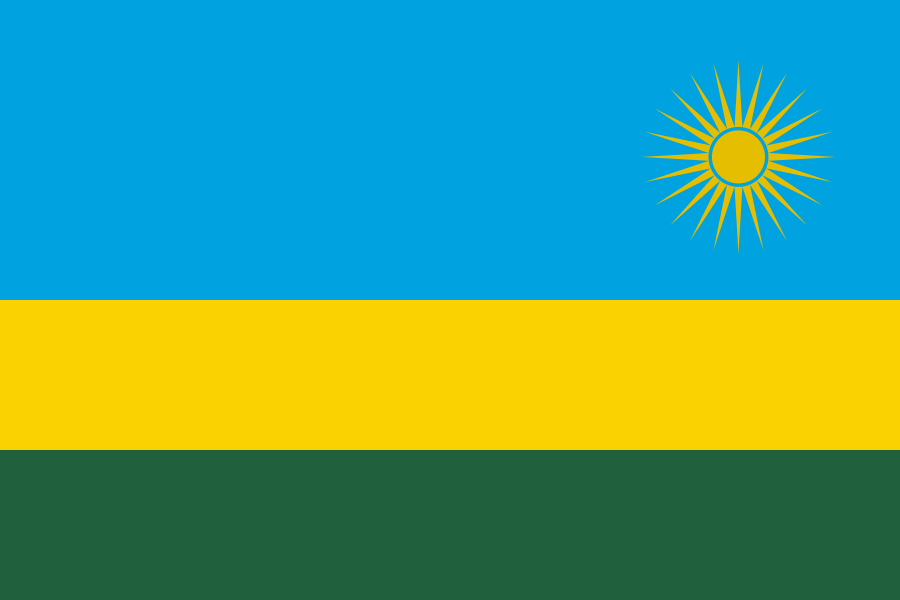
Rwanda offers a notably affordable cost of living and a pleasant year-round climate with mild, temperate weather. The country has made significant strides in infrastructure and stability, though healthcare capacity remains modest and life expectancy is lower than many Western nations. It suits retirees drawn to a quieter, lower-cost African setting who are comfortable navigating a developing-world environment.
- 통화
- RWF
- 주요 언어
- Kinyarwanda / English
- 인구
- 15M
한눈에 보기
수치의 변화
Rwanda's economy has expanded steadily over the past decade and a half. GDP per capita (in PPP terms) grew from 1,314 international dollars in 2010 to 3,711 in 2024—a more than doubling of wealth per person, reflecting robust economic growth despite global shocks. Life expectancy has climbed from 62.8 years in 2010 to 68 years in 2024, a meaningful 5.2-year gain that signals improving healthcare access and living standards. Population has grown from 10.6 million in 2011 to 14.6 million in 2025, a sign of youth and fertility rather than aging—Rwanda remains young and demographically dynamic. For a retiree, these trends are encouraging: the country is becoming wealthier, healthier, and more developed, even if absolute income and health metrics remain modest by developed-world standards. The direction is upward, suggesting infrastructure and services will continue to improve.
World Bank의 다년 시계열 — 위와 동일한 지표를 시간 경과에 따라 제공합니다.
생활비
Rwanda is noticeably cheaper than the US—at roughly 27 cents on the dollar—which makes daily life affordable on a modest retirement income. Housing tends to dominate the budget; expat rentals in Kigali command a premium, but local neighborhoods and secondary cities offer much lower rents. Food costs are low when you shop local markets and eat Rwandan staples (beans, plantains, cassava, rice); Western imports and dining at expat venues are pricier. Transport within cities is inexpensive, though fuel and vehicle maintenance add up if you own a car. Utilities and healthcare—especially private care—are generally affordable, though quality private providers in Kigali cost more than rural clinics.
Housing is typically the largest expense; a comfortable furnished apartment in a safe Kigali neighborhood runs moderate, while expat-oriented rentals in trendy areas are noticeably pricier. Local rentals in neighborhoods where Rwandans live are much cheaper. Groceries are affordable when you shop local markets for fruits, vegetables, beans, and grains; Western imports (cheese, cereal, wine) cost more. Dining out at local restaurants and roadside eateries is very cheap; expat-oriented cafés and restaurants in Kigali are pricier but still modest by US standards. Transport within Kigali via registered taxi is inexpensive; owning a vehicle and buying fuel adds up, but intercity transport by minibus is dirt-cheap. Utilities (electricity, water, internet) are affordable, though reliable high-speed internet in some areas may require a premium subscription. Healthcare via public clinics is minimal cost; private clinics and insurance premiums are moderate. Leisure—cinema, fitness gyms, hobby supplies—tilts toward local cheap unless you seek Western-standard services, which cost more. Overall, a retiree budgeting carefully can live well on modest US Social Security or pension; the 0.27 price level means your dollar stretches far.
국가 물가 수준(미국보다 약 73% 저렴)에 고정 — World Bank (PPP ÷ FX rate) 2025.
의료
Rwanda's public healthcare system covers residents, but capacity and resources remain limited outside Kigali; the healthcare coverage index of 59 reflects this uneven landscape. Life expectancy stands at 68 years, a steady improvement. Most expat retirees supplement public care with private insurance or out-of-pocket visits to private clinics, where English-speaking doctors and modern facilities are easier to find in the capital. Prescription medications are available but may be cheaper or harder to source depending on the drug; many retirees arrange shipments from home or nearby countries for specialty items. A mix of public and private care is typical and manageable if you budget for private consultation fees and plan ahead for serious medical needs.
Foreign retirees in Rwanda can access the public healthcare system once they establish residence, though quality and availability vary sharply between Kigali and rural areas; public facilities are affordable but often crowded and under-resourced. Private clinics and hospitals in Kigali offer modern care, English-speaking doctors, and shorter waits, and many expats rely on these for routine and non-emergency care. Travel insurance with medical evacuation coverage is essential, as Rwanda cannot manage complex surgeries or ICU care at the level many Western retirees expect—serious emergencies may require evacuation to Kenya, South Africa, or Europe. Prescription medications are available through pharmacies but selection is limited and some Western drugs are hard to source; many retirees ship medications from home or arrange them via online services, though customs rules apply. Private health insurance for expats is relatively affordable and often covers both public and private care; finding English-speaking practitioners is straightforward in Kigali but harder in secondary towns. For dental work, eye care, and specialist services, Kigali has options; elsewhere, you may need to travel to the capital or plan trips to regional hubs. The healthcare coverage index of 59 reflects real gaps in capacity, so managing expectations and maintaining good preventive habits—diet, exercise, stress management—is crucial to staying healthy long-term in Rwanda.
보장 지수 59/100 (WHO 2023) · 기대 수명 68 세 (World Bank 2024). 일반 정보이며 의료 자문이 아닙니다.
5가지 요소 프로필
각 축은 위의 출처 지표와 아래의 기후 기준에서 도출한 0–100 점수이며, 수동으로 설정된 것은 없습니다. 정확한 공식은 방법론을 참조하세요.
- 생활비 저렴함95
- 의료59
- 기후 쾌적함95
- 수명43
- 번영23
기후 및 계절
Rwanda sits at high elevation, which keeps temperatures mild year-round—pleasantly cool by tropical standards. Kigali averages 19.8°C annually, with January around 20.3°C and July around 19°C, so you'll rarely feel extreme heat or cold. Butare, in the south, is slightly warmer at 20.5°C average (January 20.9°C, July 19.5°C). Gisenyi, on Lake Kivu in the west, is cooler at 17.3°C year-round (January and July both around 16–17°C). Rainfall is the bigger factor: expect two rainy seasons (March–May and September–November) with annual totals around 1,300 mm in Kigali and Butare, rising to 1,693 mm in the wetter Gisenyi. The dry seasons (June–August and December–February) are ideal for travel and outdoor activity, though mornings can be chilly at elevation. Pack layers and rain gear; humidity is generally moderate thanks to the altitude.
| 도시 | 연간 평균 | 1월 | 7월 | 연간 강우량 |
|---|---|---|---|---|
| Kigali | 19.8°C | 20.3°C | 19°C | 1,291 mm |
| Butare | 20.5°C | 20.9°C | 19.5°C | 1,269 mm |
| Gisenyi | 17.3°C | 17.3°C | 16.7°C | 1,693 mm |
출처: NASA POWER (MERRA-2 climatology), long-term climatology.
일년의 생활
January brings warm, dry weather; Kigali averages 20.3°C, making it pleasant for outdoor activity and travel. This is peak season—festivals and community events abound, and the landscape is lush from the previous rains. February remains dry and warm; temperatures hold steady around 20°C in Kigali and Butare. March marks the start of the long rains; rainfall increases noticeably, and travel becomes muddier, but the country turns verdant. April and May are wet; expect afternoon downpours in most regions, humid mornings, and roads outside Kigali can be challenging. Late May signals the dry season; rainfall drops and you can resume easy travel. June through August is the best season—dry, cool (July in Kigali sits around 19°C), and ideal for hiking, visiting cultural sites, and exploring the countryside without mud or heat. September marks the start of the short rains; brief showers in the afternoons, but mornings are clear and it's less intense than the long rains. October and November are wet again, with similar conditions to April–May. December transitions back to dry; it's warm (Kigali around 20°C), festive with year-end celebrations, and good for travel. Throughout the year, altitude keeps Kigali and most regions cool; Gisenyi, on the lake, stays cooler year-round (around 17°C). Plan major travel or outdoor projects for the dry seasons (January–February and June–August); embrace the rains for indoor pursuits, reading, and local community time.
도시 상세 정보
Kigali, the capital, sits at elevation in a hilly landscape and offers the most expat services, healthcare, restaurants, and nightlife; it's the hub for anyone needing urban amenities and English-speaking professionals, though traffic and crowds are growing. Butare (Huye), in the south, is cooler, quieter, and home to the National University; it attracts those seeking a gentler pace and lower costs, with less expat infrastructure but genuine local character. Gisenyi, on Lake Kivu's shores, is the coolest and most scenic, with a bohemian feel and proximity to Congo; it suits retirees seeking natural beauty and a small-town vibe, though it's more remote from major services. Each city offers a different balance of convenience and tranquility; most retirees start in or near Kigali, then migrate outward as they settle and reduce their need for Western conveniences.
은퇴 비자 경로
Rwanda offers a Retirement Visa (or Long-Term Residence Permit) route for foreign retirees; eligibility criteria typically include age around 50 or older and proof of steady income or savings, though the exact threshold and requirements are set by Rwanda's immigration authority. The process begins with an application through Rwanda's immigration portal or a consulate in your home country, followed by documentation of your income, a clean police record, and a medical clearance. Once approved for entry, you'll receive an entry visa, then convert it to a resident permit upon arrival in Rwanda; renewal is usually annual, with a path toward permanent residence after several years of continuous residence. Contact your nearest Rwandan embassy or consulate, and visit the official Government of Rwanda immigration portal to verify current thresholds, eligibility criteria, and requirements before applying.
단계별 안내
1. Gather documents: Proof of income (pension statements, investment statements, or employment letters) or evidence of savings, valid passport, clean police clearance (from your home country), medical certificate of good health, and birth certificate. 2. Contact your nearest Rwandan embassy or consulate and request the Retirement Visa or Long-Term Residence Permit application package; confirm the current income threshold (typically around a modest monthly amount—verify with the embassy). 3. Complete the application form and submit with all supporting documents through your embassy or consulate; allow time for initial review. 4. Attend a biometrics appointment and submit to a medical examination and police background check as required. 5. Receive your entry visa (typically valid for 90 days or more). 6. Arrive in Rwanda and, within the validity period, report to the Rwanda Directorate General of Immigration and Emigation to convert your entry visa to a resident permit. 7. Obtain your resident ID card and residence permit, usually valid for one year initially. 8. Renew annually at the immigration office in Kigali or your provincial center; after several years of continuous residence, you may be eligible for permanent residence. Timelines vary; allow several weeks to months for the full process. Refer to the official Government of Rwanda immigration portal for current forms, fees, and exact thresholds, and contact your nearest Rwandan embassy or consulate for guidance specific to your situation.
검증된 공식 출처: www.migration.gov.rw
공식 자료를 바탕으로 AI가 초안 작성 · 인간 검토 대기 중 · 2026-07 작성
세금
Rwanda taxes residents on worldwide income, but foreign retirees with non-Rwandan sources may benefit from tax treaties or exemptions depending on their status and treaty country. Personal income tax rates exist, though details and rates vary by residency classification and source of income. Rental income and business earnings are taxed, but pension and investment income treatment can differ; many retirees find retirement income from abroad taxed lightly or not at all under specific conditions. You must establish tax residency if you spend enough time in Rwanda, and failure to register can create problems. Tax law and treaty provisions are complex and personal; consult a cross-border tax professional or a Rwandan tax advisor who understands expat situations before you commit, and again when you arrive.
안전 및 여행경보
Rwanda appears safer relative to some regional comparisons, and your home government's official travel advisory provides the most current and authoritative assessment; check it for details on violent crime, petty theft, and security conditions. Petty theft and pickpocketing occur, as in any city, so standard urban caution applies—avoid walking alone at night, use registered taxis, and keep valuables secure. Healthcare is adequate but not world-class, so serious medical emergencies may require evacuation to a regional hub like Kenya or South Africa; ensure you have comprehensive travel and medical insurance. Road conditions outside cities can be rough, and driving standards differ from the US; taxis and hired drivers are safer than self-driving for the unfamiliar. For the most current picture on health risks, security, and travel advisories, consult your home government's official travel advisory for Rwanda.
여기서 은퇴하는 것의 모습
Life in Rwanda moves at a deliberate pace, especially outside Kigali; mornings are cool and misty at elevation, and the rhythm revolves around meals, community, and outdoor time in the dry seasons. Kigali has a growing expat community and urban conveniences—restaurants, gyms, shopping—but outside the capital, life is quieter and more local. English is widely spoken in Kigali and among younger Rwandans, but learning Kinyarwanda opens doors and earns respect; in rural areas, English becomes less reliable. Getting around Kigali on foot is manageable in parts, but distances and hills mean most retirees rely on taxis or a driver. The expat bubble is real but not overwhelming; many retirees engage deeply with Rwandan culture and community rather than retreating into a Western enclave. Social life centers on church, fitness classes, dinner clubs, and volunteer or nonprofit work; the pace suits those seeking calm and purpose over nightlife and bustle.
다음과 같은 사람에게 적합: Retirees seeking deep affordability, adventure, and cultural immersion in a stable African country, with realistic expectations about healthcare and willingness to engage with a less touristy setting.
자주 묻는 질문
- Rwanda에서 은퇴하는 데 비용이 얼마나 드나요?
- Rwanda의 전체 생활비는 미국보다 약 73% 저렴입니다 (World Bank PPP 가격 수준). Rwanda is noticeably cheaper than the US—at roughly 27 cents on the dollar—which makes daily life affordable on a modest retirement income. Housing tends to dominate the budget; expat rentals in Kigali command a premium, but local neighborhoods and secondary cities offer much lower rents.
- Rwanda의 의료는 어떻게 되나요?
- Rwanda은 WHO 보편적 의료보장 지수에서 59/100으로 평가됩니다. Rwanda's public healthcare system covers residents, but capacity and resources remain limited outside Kigali; the healthcare coverage index of 59 reflects this uneven landscape. Life expectancy stands at 68 years, a steady improvement.
- Rwanda의 기후는 어떻게 되나요?
- Rwanda은 연중 평균 19.8°C이며, 18.8°C에서 20.8°C 범위입니다 (NASA POWER 표준). Rwanda sits at high elevation, which keeps temperatures mild year-round—pleasantly cool by tropical standards. Kigali averages 19.8°C annually, with January around 20.3°C and July around 19°C, so you'll rarely feel extreme heat or cold.
- Rwanda이 제공하는 은퇴 또는 장기체류 비자는 무엇인가요?
- Rwanda does not have a dedicated retirement or long-stay visa program. Visitors typically enter on a tourist visa (often granted on arrival) valid for 30 days. Those wishing to stay longer should contact the Rwandan immigration authorities or consulate to explore options such as business residence permits or temporary resident status, which may require proof of financial means or sponsorship.
- 은퇴자에게 Rwanda은 안전한가요?
- Check your government's official travel advisory for Rwanda before deciding to retire there, as security and health conditions are regularly updated.
- Rwanda에서 은퇴하면 세금을 내야 하나요?
- Rwanda has personal income tax and property tax rules that may apply to residents; consult a local tax professional or your home country's tax authority before relocating to understand your obligations.
다음에 살펴볼 곳
Sub-Saharan Africa의 더 많은 정보




유사한 생활비