Southern Europe
San Marinoで退職する
San Marino is a small, affluent hilltop republic nestled between Italy and the Adriatic, with excellent healthcare and a life expectancy among Europe's highest. The cost of living is moderate relative to Western Europe, and the mild winters and temperate summers suit those seeking a peaceful, culturally rich setting without extremes of weather or crowds.
- 通貨
- EUR
- 主言語
- Italian
- 人口
- 0M
一目で分かる
数字の推移
San Marino's economic fortunes have been volatile and worth watching. GDP per capita (in purchasing-power parity terms) fell sharply from 61,970 international dollars in 2009 to a trough of 50,770 in 2013, reflecting the global financial crisis and its aftermath—a period of genuine economic stress. Recovery was slow and uneven: by 2016–2017, the country had stabilized around 52,000–53,000. Then a stronger recovery took hold: the figure climbed to 64,745 in 2021, 75,941 in 2022, and 78,745 in 2023, suggesting genuine economic momentum in recent years. This upward trend is encouraging for stability and public services. Life expectancy has climbed steadily from 83.5 years in 2010 to 85.8 in 2024, reflecting improving health and longevity—very positive for a retiree. Population has been essentially flat, hovering around 33,000–34,000, so no major demographic strain. Overall, the recent economic and health trends are reassuring.
World Bank のマルチイヤーシリーズ — 上記と同じインジケーターを時系列で表示したもの。
生活費
San Marino is noticeably cheaper than the US overall—about 21% lower on average—though the savings vary by category. Housing tends to dominate your budget, especially if you're renting in or near the capital; food and dining out are moderately priced, with local produce and Italian staples reasonably affordable. Utilities, transport within this tiny country, and leisure activities feel quite reasonable. Healthcare costs for residents are generally low because of the public system, though many expats supplement with private insurance. The euro strengthens or weakens against your home currency, so exchange-rate timing matters if you're converting savings.
Housing (rent or mortgage) is typically the largest expense and varies sharply by location—central San Marino town commands premium prices, while Serravalle and Borgo Maggiore offer better value. Groceries and fresh produce are moderately priced; Italian supermarkets and neighborhood shops stock basics affordably, though imported specialty items cost more. Dining out is moderate—a simple lunch or dinner in a local trattoria feels reasonable, while tourist-targeted restaurants in the old town are pricier. Transport within San Marino is minimal (it's tiny), and public bus service is inexpensive; owning a car costs the same as in Italy (fuel, insurance, maintenance), but many retirees manage without one. Utilities (electricity, gas, water) are affordable and lower than the US, especially if you don't rely on air conditioning. Healthcare through the public system is very cheap once you're enrolled; private insurance for supplementary coverage is an additional modest cost. Leisure—cafés, cultural events, local festivals—is inexpensive. Overall, you'll spend less than the US, with the biggest variable being housing choice.
国の物価水準(米国より約21%安い)を基準としています — World Bank (PPP ÷ FX rate) 2023。
医療
San Marino's public healthcare system covers residents and has a coverage index of 74, suggesting good but not universal accessibility. Life expectancy stands at 85.8 years, reflecting a functional and reasonably well-resourced system. Foreign retirees can typically access public care once established as residents, though the process varies and often requires proof of legal residence and sometimes local income or contribution history. Most expatriate retirees use a hybrid approach: relying on public care for major or chronic conditions while purchasing private health insurance for faster access, specialist consultations, and dental work. English-speaking doctors exist, especially in larger towns and among private practitioners, but Italian is the default language in the public system. Prescription medications are generally available and affordable through the public system or private pharmacies.
As a foreign retiree in San Marino, you can access the public healthcare system once you've established legal residence, though the enrollment process requires proof of residency and sometimes proof of income or contribution history—clarify requirements with your local health authority when you arrive. The public system covers general practitioners, hospitals, emergency care, and specialist referrals; the coverage index of 74 suggests reasonable but not seamless accessibility, meaning some services may have waiting times or require out-of-pocket payment for certain treatments or medications. Life expectancy of 85.8 years indicates a functioning system that keeps people healthy into advanced age. Most expatriate retirees buy supplementary private health insurance to bypass public waiting lists, access English-speaking doctors, and secure faster specialist appointments and dental care—a hybrid approach is standard. Finding an English-speaking physician is possible but not guaranteed in the public system; private clinics and practices are more likely to have English-capable staff. Prescriptions issued by public doctors can be filled at pharmacies under the public scheme (discounted or free, depending on your status) or privately. Getting established with a GP (medico di base) is one of your first tasks after arrival. Expect administrative slowness and some language barriers in the public system, but overall competence and care quality are high.
カバレッジ指数 74/100 (WHO 2023) · 平均寿命 85.8 年 (World Bank 2024). 一般情報であり、医学的助言ではありません。
5つの要因プロフィール
各軸は、上記のソース指標と下記の気候標準値から導出された0~100のスコアであり、手動で設定されたものではありません。正確な計算式については方法論を参照してください。
- 手頃さ41
- 医療74
- 気候の快適さ74
- 長寿100
- 繁栄86
気候と季節
San Marino sits on the Adriatic side of the Apennines with a mild Mediterranean-influenced climate. January averages 5.6°C across all towns—San Marino, Serravalle, and Borgo Maggiore—bringing cool, crisp winters with occasional frost at elevation; July reaches 24.9°C, warm but rarely oppressive. Annual rainfall is 770mm, spread fairly evenly through the year with slightly wetter autumn and spring months. Winters are short and not severe, so older joints and respiratory systems generally cope well. Summers are comfortable—warm enough for terraces and outdoor dining, but the elevation tempers heat compared to lower-lying Italian regions. Spring arrives early, and autumn lingers; shoulder seasons dominate the year, making it amenable to year-round outdoor activity at a gentle pace.
| 都市 | 年間平均 | 1月 | 7月 | 年間降雨量 |
|---|---|---|---|---|
| San Marino | 14.7°C | 5.6°C | 24.9°C | 770 mm |
| Serravalle | 14.7°C | 5.6°C | 24.9°C | 770 mm |
| Borgo Maggiore | 14.7°C | 5.6°C | 24.9°C | 770 mm |
出典: NASA POWER (MERRA-2 climatology), long-term climatology。
1年の生活
January and February are your cool months (averaging 5.6°C), with crisp, clear days and occasional frost; winter is brief and not harsh, so outdoor walks are pleasant if you dress warmly, and heating costs remain moderate. Spring (March–May) arrives early, bringing mild weather and green hillsides—ideal for gentle walks and terraces reopening; rainfall increases slightly, but it's rarely punishing. Summer (June–August) brings warmth (averaging 24.9°C in July) and drier days; humidity is low compared to coastal Italy, and heat is comfortable, not oppressive. This is when tourists arrive and the old town buzzes; many local festivals happen, and evening passeggiata (walks) become part of the social rhythm. Autumn (September–November) is a second shoulder season—mild, slightly wetter, with harvest festivals and wine celebrations; many retirees find this the most pleasant time. Your rhythm as a retiree will likely shift with the seasons: more indoor activity and short outings in winter, more hiking and café time in spring and autumn, leisurely lunches and evening entertaining in summer. The overall pace is unhurried year-round, and none of the seasons is harsh enough to confine you indoors.
都市を詳しく見る
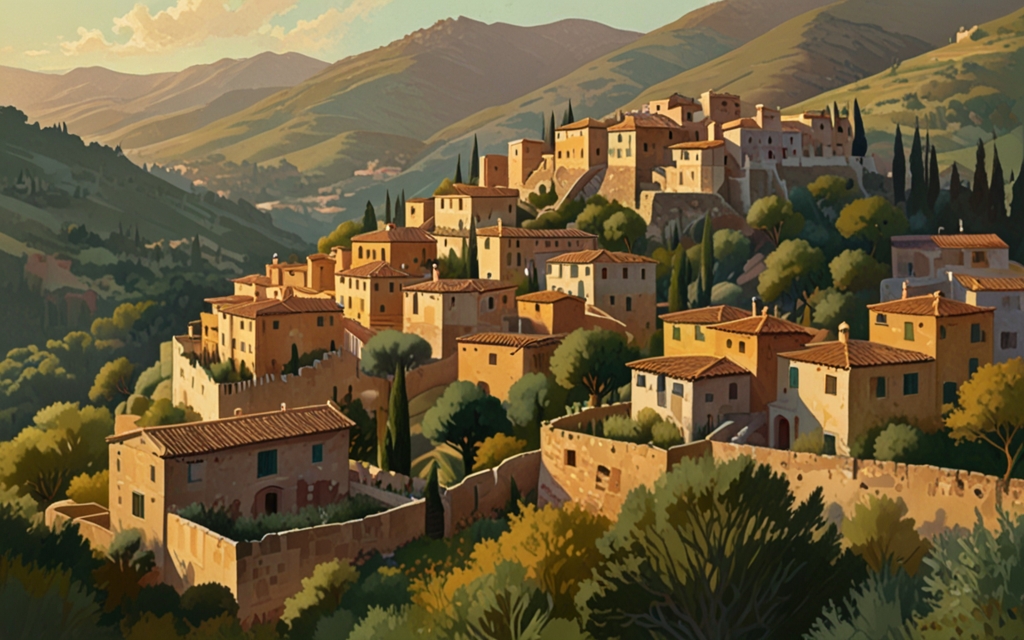
San Marino (the capital and old town) crowns a dramatic hilltop and feels medieval and touristy, with narrow cobbled streets, fortifications, and views across the Adriatic plain; it's the cultural and administrative heart but can feel crowded in summer. Serravalle is the most populous parish and more modern, lower down the slopes, with shops, schools, and a pragmatic everyday feel—closer to where local life actually happens. Borgo Maggiore sits between them, quieter and residential, a good compromise for those seeking calm without isolation. All three share the same mild climate and are within easy walking or short driving distance. Choose the capital for old-world charm and tourist amenities, Serravalle for convenience and local flavor, or Borgo Maggiore for peace.
リタイアメントビザの道
San Marino has a residence permit pathway for foreign retirees and long-term stayers, though it is less codified than some European routes. Generally, applicants are expected to demonstrate stable income (from pensions, savings, or investments—verify the current threshold with the Consulate, as figures change) sufficient to support themselves without becoming a public burden, plus proof of health insurance; however, final eligibility is determined by the official consulate and immigration authorities. The process typically begins at your nearest San Marino consulate or embassy, where you gather documents, provide police clearance and medical certification, and submit your application. Processing takes weeks to a few months. Once approved, you enter San Marino and convert your entry visa to a residence permit through the local immigration office. Permits are usually renewable annually and can lead toward permanent residence after a period of continuous residence. For current eligibility, exact income thresholds, and the full application checklist, consult the official government immigration portal and your nearest consulate—rules and requirements shift periodically.
ステップバイステップ
Here are the concrete steps to pursue San Marino residence as a retiree: (1) Gather documents—a valid passport, proof of pension or income (verify the current threshold with the Consulate), bank statements showing financial stability, proof of health insurance, a police clearance certificate from your home country, and often a medical certificate of good health. (2) Contact your nearest San Marino consulate or embassy and request the current retirement residence application pack; requirements can shift. (3) Prepare and submit your application through the consulate with all supporting documents, typically translated to Italian and notarized. (4) Undergo any required police, medical, or background checks; processing takes weeks to several months depending on the consulate's workload. (5) Once approved, receive your entry visa (usually a D visa for long-term residence). (6) Travel to San Marino and report to the local immigration office (Ufficio Immigrazione) to convert your entry visa into a residence permit, which requires local registration and proof of address. (7) Renew your residence permit annually or on the schedule specified; after a period of continuous legal residence, you may qualify for permanent residence. For exact current thresholds, required documents, timelines, and the application process, consult the official San Marino government immigration portal and your nearest consulate—do not rely on outdated information.
公式情報源の確認済み: www.sanmarinosite.com
公式情報源からAIが作成 · 人間による確認待ち · 2026-07に作成
税金
San Marino taxes worldwide income for residents, but the structure is more favorable than many EU countries, particularly for retirees. Foreign-source pension income may qualify for preferential treatment depending on your residency status and bilateral tax treaties between San Marino and your home country. Capital gains, dividends, and interest have specific treatment; some are taxed, some are not, depending on the source and your residency classification. Wealth tax and property tax exist and apply to residents holding assets in San Marino. Because tax law is complex and varies sharply by your citizenship, income mix, and treaty status, you must consult a cross-border tax professional—preferably one with San Marino experience—before committing. Do not assume that San Marino is a tax haven; it cooperates with international information exchange, and oversights can be costly.
安全と勧告
San Marino is a very small, stable, and low-crime country, with a notably peaceful reputation. Petty theft and scams exist but are far less common than in larger Italian cities. As an older retiree, you're unlikely to face targeted crime, though standard urban awareness applies: don't flash valuables, avoid empty streets late at night, and keep copies of documents separate from originals. Healthcare and emergency services are reliable and reachable. The main practical hazards are steep terrain (the towns cling to hillsides), winter weather on mountain roads if you drive, and the usual traffic courtesies of Southern Europe. For the current security picture and any travel advisories, check your own government's official travel advisory—conditions can shift—but San Marino's baseline is genuinely secure.
ここで退職することについて
Life in San Marino unfolds at a relaxed, walkable pace. The country is tiny—you can cross it in an hour by car—so a car is useful but not essential if you live centrally. Italian is the working language; English is increasingly spoken by younger residents and in tourism, but you'll want conversational Italian for daily life, healthcare, and administration. The expat community exists but is small; you'll mix with Sammarinese locals, Italian cross-border residents, and fellow foreign retirees. There's no hustle; life revolves around family meals, seasonal festivals, and the rhythm of the Italian calendar. Shopping is mostly small, neighborhood-scale; supermarkets and pharmacies are accessible but limited compared to larger countries. Social life tends to be informal—cafés, restaurants, walking groups, and church or civic associations form the backbone. Adjusting means embracing slowness, learning Italian, and accepting a lack of big-city amenities.
通常は以下の方に適しています: Retirees comfortable with Italian language and culture, seeking a compact, stable community with strong healthcare and low crime, who don't require a large expatriate social scene.
よくある質問
- San Marinoでの退職にはいくらかかりますか?
- San Marinoの生活費全体は米国より約21%安いです(World Bank PPP物価水準)。 San Marino is noticeably cheaper than the US overall—about 21% lower on average—though the savings vary by category. Housing tends to dominate your budget, especially if you're renting in or near the capital; food and dining out are moderately priced, with local produce and Italian staples reasonably affordable.
- San Marinoのヘルスケアはどのようなものですか?
- San MarinoはWHOユニバーサルヘルスカバレッジ指数で74/100のスコアを獲得しています。 San Marino's public healthcare system covers residents and has a coverage index of 74, suggesting good but not universal accessibility. Life expectancy stands at 85.8 years, reflecting a functional and reasonably well-resourced system.
- San Marinoの気候はどのようなものですか?
- San Marinoの年間平均気温は14.7°Cで、5.6°Cから24.9°Cの範囲です(NASA POWER基準値)。 San Marino sits on the Adriatic side of the Apennines with a mild Mediterranean-influenced climate. January averages 5.6°C across all towns—San Marino, Serravalle, and Borgo Maggiore—bringing cool, crisp winters with occasional frost at elevation; July reaches 24.9°C, warm but rarely oppressive.
- San Marinoはどのような退職ビザまたは長期滞在ビザを提供していますか?
- San Marino does not maintain a dedicated retirement visa program. Long-stay or residence options fall under Italian/EU frameworks or bilateral arrangements; non-EU citizens typically need to secure residence permission through Italy (as San Marino has no independent immigration authority) or explore elective residency on grounds of independent means. You should contact the San Marino Tourist Office or your nearest Italian consulate for current long-stay requirements and documentation, as rules can shift.
- San Marinoは退職者にとって安全ですか?
- Check your home country's official travel advisory for San Marino before committing to a move.
- San Marinoで退職した場合、税金を支払う必要がありますか?
- San Marino has its own tax regime; consult a cross-border tax professional to understand your obligations, especially if you hold EU or other residency concurrently.
次に探すべき場所
Southern Europe内のその他
同等の生活費