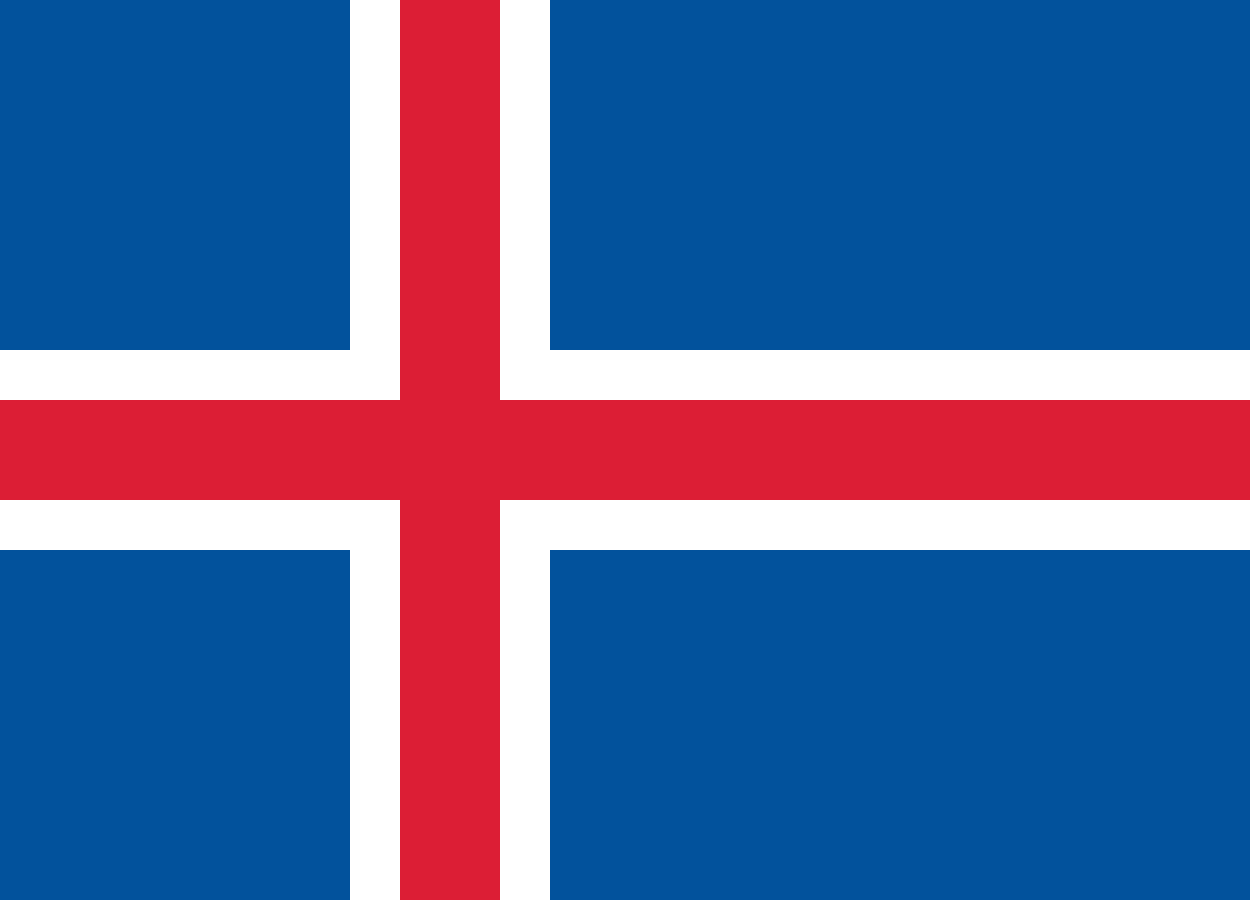
Northern Europe
Jubilarse en Iceland
Iceland offers exceptional healthcare and one of the world's highest life expectancies, with a stable, wealthy society built on geothermal energy and strong institutions. Living costs run meaningfully higher than the US, and winters are long and cold, but if you prize safety, robust public services, and pristine natural landscapes, it's a compelling choice—provided your budget can stretch.
- Moneda
- ISK
- Idioma principal
- Icelandic
- Población
- 0M
De un vistazo
Costo de vida
~18% más caro que EE.UU.
nivel de precios nacional vs EE.UU. · World Bank (PPP ÷ FX rate), 2025
Cómo han evolucionado los números
Iceland's economy has recovered strongly since 2020. GDP per capita (purchasing power parity) stood at 39,764 international dollars in 2010, rose to 40,937 in 2011, then grew steadily to 84,257 in 2024—more than doubling over the period. This reflects robust economic growth and rising living standards, which is encouraging for retirees considering the country's infrastructure and services. Life expectancy has remained high and stable: 81.9 years in 2010, rising to 83.2 years by 2019 and settling at 82.8 years in 2024, reflecting consistent healthcare quality. Population has grown notably from 319,014 in 2011 to 392,404 in 2025, driven partly by immigration and tourism; this growth is worth monitoring if you value quietness, though Iceland remains sparsely populated. Overall, the direction is positive for retirees: a prosperous, aging-friendly society with excellent healthcare and strong economic momentum.
Series plurianuales del World Bank — los mismos indicadores que arriba, a lo largo del tiempo.
Costo de vida
Iceland is noticeably more expensive than the US—prices run about 18% higher overall. Housing dominates your budget, especially in and around Reykjavík, where rental costs are substantial. Groceries and dining out are both pricier than what you're used to, though buying local produce and fish at markets helps. Transport, heating, and utilities also cost more than typical US levels, though many retirees find the overall lifestyle manageable on a comfortable income. Healthcare and leisure activities tend to feel less burdensome in comparison.
Housing is your largest expense—rent or purchase prices in Reykjavík and surrounding towns are steep, and heating costs are high year-round. Groceries are noticeably pricier than the US, particularly imported goods and fresh produce; buying local and seasonal helps. Dining out is expensive, though cafés and casual restaurants are cheaper than formal dining. Transport costs vary: owning a car means fuel, maintenance, and winter tire expenses; public buses in Reykjavík are affordable and reliable, but coverage outside the capital is sparse. Utilities (electricity, water, heating) are substantial in winter but manageable year-round thanks to abundant geothermal energy. Healthcare expenses for residents are minimal through the public system; private insurance and out-of-pocket dental or optical care add modestly. Leisure activities—swimming in geothermal pools, hiking, museums—are affordable or free. Clothing and winter gear are expensive but necessary. Overall, housing and food dominate spending; you'll need a solid retirement income to live comfortably.
Anclado al nivel de precio nacional (~18% más caro que EE.UU.) — World Bank (PPP ÷ FX rate) 2025.
Sanidad
Iceland's public healthcare system is universal and high-quality, with a coverage index of 90—among the world's best. Life expectancy is 82.8 years, reflecting excellent preventive and acute care. As a resident, you can access the public system through the Icelandic Health Insurance Fund, though many people also maintain private insurance for faster access to specialists and dental work. English-speaking doctors are common in Reykjavík and larger towns, and prescription medications are available through pharmacies. Most retirees use a mix of public care for routine and urgent needs and private care for convenience and specialist appointments.
As a foreign resident in Iceland, you can enroll in the public healthcare system (Sjúkratryggingar Íslands) once you meet residency requirements and are registered with a municipality. This gives you access to GPs, specialists, hospitals, and emergency care at minimal out-of-pocket cost, funded through mandatory health insurance contributions. However, the public system has modest waiting times for non-urgent care—routine appointments often take weeks, and specialist referrals can take longer. Most residents, including retirees, supplement public coverage with private health insurance (widely available and affordable relative to care quality) to access faster specialist appointments, dental work, and physiotherapy. Finding an English-speaking GP is straightforward in Reykjavík; outside the capital, English fluency varies, so learning basic Icelandic medical terms is helpful. Prescriptions are filled through pharmacies and covered partially by the public insurance system, with prices moderate by Icelandic standards. The high healthcare coverage index of 90 and life expectancy of 82.8 years reflect excellent preventive care, strong pharmaceutical access, and low mortality from preventable disease. Dental care, hearing aids, and glasses are typically not fully covered by public insurance and are considered privately. Emergency care is excellent and responsive. Most retirees find the mixed public-private approach works well: use the public system for ongoing care and emergencies, and pay out-of-pocket or use private insurance for faster convenience and specialist access.
Índice de cobertura 90/100 (WHO 2023) · esperanza de vida 82.8 años (World Bank 2024). Información general, no es consejo médico.
El perfil de cinco factores
Cada eje es una puntuación de 0–100 derivada de los indicadores obtenidos arriba y los normales climáticos abajo — nada se ha establecido manualmente. Consulta la metodología para ver las fórmulas exactas.
- Asequibilidad0
- Sanidad90
- Comodidad climática21
- Longevidad90
- Prosperidad87
Clima y estaciones
Iceland's climate is cold, windy, and surprisingly wet year-round—prepare for substantial rainfall and long, dark winters. In Reykjavík, January averages 0°C with 1,638 mm of annual precipitation spread across frequent rain and sleet; July warms to only 11.1°C. Akureyri, in the north, is notably colder: January drops to −6.7°C and July reaches 6.8°C, with 1,257 mm of rain annually. Winters (November through March) bring near-continuous darkness, requiring adjustment to your circadian rhythm and mood. Summers (June through August) offer midnight sun and cool, often wet conditions—perfect for hiking if you're weatherproof. Spring and autumn are short shoulders with unpredictable wind and rain. Hafnarfjörður, on the coast near Reykjavík, mirrors the capital's temperatures and rainfall. Most retirees find the constant daylight shifts and wind require practical clothing and psychological adaptation, though many embrace the dramatic natural rhythm.
| Ciudad | Media anual | Enero | Julio | Lluvia / año |
|---|---|---|---|---|
| Reykjavík | 4,6°C | 0°C | 11,1°C | 1638 mm |
| Akureyri | -1,4°C | -6,7°C | 6,8°C | 1257 mm |
| Hafnarfjörður | 4,6°C | 0°C | 11,1°C | 1638 mm |
Fuente: NASA POWER (MERRA-2 climatology), long-term climatology.
Un año en la vida
January in Reykjavík and Hafnarfjörður is dark and cold (0°C mean), with frequent rain and wind—a time for indoor culture, thermal pools, and adjusting to the perpetual twilight. Akureyri is notably harsher at −6.7°C, often snowbound, appealing to those who embrace winter sports and solitude. February and March remain dark and wet, though daylight slowly returns; many retirees experience seasonal mood shifts and lean on community. April and May bring rapidly increasing daylight and modest warming, with wildflowers beginning to bloom; this shoulder season is beautiful but still unpredictable and wet. June through August is summer proper—July reaches 11.1°C in Reykjavík and Hafnarfjörður, only 6.8°C in Akureyri—with midnight sun, dry-ish weather, and intense hiking and outdoor activity; retirees often find this the easiest time to explore and socialize. September and October are autumn, with shortening days, cooling temperatures, and frequent rain; migration season brings bird-watching opportunities. November through December darken rapidly into winter again; winter holidays create social warmth and festive atmosphere despite the cold and darkness. Annual precipitation is substantial everywhere (1,638 mm in Reykjavík and Hafnarfjörður, 1,257 mm in Akureyri), distributed across frequent rain, sleet, and occasional snow, so waterproof gear is non-negotiable year-round. Many retirees time travel or leisurely activities around summer and shoulder seasons, and embrace the winter indoors with books, culture, and geothermal bathing.
Las ciudades, de cerca
Reykjavík, the capital and by far the largest settlement, is a vibrant, walkable city with colorful corrugated-iron houses, excellent museums, cafés, and a small but thriving cultural scene; it suits retirees seeking community, convenience, and cultural engagement. Hafnarfjörður, a coastal town just south of Reykjavík, is quieter and smaller while remaining accessible to the capital's services; it appeals to those wanting a more intimate setting without complete isolation. Akureyri, in the north, is Iceland's second-largest town and much quieter still—a good fit for retirees seeking solitude, dramatic scenery, and a slower pace, though it feels more remote and the winters are notably harsher. All three offer reliable infrastructure, English-speaking services, and strong ties to the Icelandic outdoors.
Ruta de visa de jubilación
Iceland does not have a formal retirement visa program with a specific income threshold. Instead, you can apply for residence through family reunification (if you have relatives), as a self-employed person or investor, or increasingly as a remote worker with a valid employment contract and insurance. The most realistic path for a foreign retiree is demonstrating financial self-sufficiency—savings or passive income substantial enough to support yourself without working in Iceland—and securing private health insurance. Most applicants apply at their nearest Icelandic embassy or consulate with proof of income or savings, a clean criminal record, and medical clearance. The process typically takes several months. For the most current requirements and to begin your application, consult the official Icelandic Directorate of Immigration portal and your nearest Icelandic embassy or consulate.
Paso a paso
1. Gather financial documentation proving income or substantial savings (around the equivalent of living expenses for 1–2 years, though verify the current threshold with the Directorate of Immigration), a clean criminal record certificate from your home country, proof of private health insurance valid in Iceland, and a valid passport. 2. Contact your nearest Icelandic embassy or consulate and request the residence application package for your category (self-sufficient person, remote worker, or other applicable pathway). 3. Submit a completed application with all supporting documents; the consulate will inform you of biometric, medical examination, and police check requirements specific to your situation. 4. Attend any required appointment (biometrics, medical exam, or interview) at the consulate. 5. Receive an entry visa stamp in your passport (valid typically for a few months). 6. Travel to Iceland and register with the local municipality and the Directorate of Immigration within the first days of arrival. 7. Apply for an Icelandic residence permit in-country; this typically involves submitting additional documentation and proof of address. 8. Once approved, you receive a residence permit valid for a set period (often 1–2 years initially). 9. On or before the permit expires, apply for renewal and work toward long-term or permanent residence. The entire process from initial inquiry to arrival usually takes 3–6 months. For step-by-step guidance and current requirements, visit the official Icelandic Directorate of Immigration portal and contact your nearest Icelandic embassy or consulate.
Fuente oficial verificada: www.utl.is
Redactado por IA a partir de fuentes oficiales · pendiente de revisión humana · redactado 2026-07
Impuestos
Iceland taxes residents on worldwide income, and you become a resident for tax purposes once you live there. Foreigners with an Icelandic address are generally subject to Icelandic income tax on employment, pensions, rental income, and investment returns. Iceland has tax treaties with many countries (including the US) to prevent double taxation, but the specifics depend on your residency status, the source of your income, and the treaty provisions. Pension income and capital gains are taxed differently than employment income. Because tax residency rules are complex and retiree income sources vary widely, you absolutely need to consult a cross-border tax professional—ideally one familiar with both Iceland and your home country—before you move to understand your obligations and plan accordingly.
Seguridad y avisos
Iceland is one of the world's safest countries for everyday living. Violent crime is rare, theft is uncommon, and police response is reliable. As an older resident, you can walk around Reykjavík and other towns day and night with confidence. The main health and safety concern is the environment itself: icy conditions in winter, powerful weather, and rugged terrain require caution and appropriate gear. Road conditions can deteriorate quickly in winter; if you drive, winter tires and good vehicle maintenance are essential. Geothermal areas and waterfalls are spectacular but demand respect and attention to warning signs. For the most current official perspective on safety and any health advisories, check your government's travel advisory for Iceland.
Cómo es jubilarse aquí
Life in Iceland moves at a deliberate pace, with a strong emphasis on community, outdoor activity, and self-sufficiency. Retirees often find themselves drawn to hiking, swimming in geothermal pools, and exploring the dramatic landscape year-round. Expat communities exist, especially in Reykjavík, making social connection easier, though Icelandic society is reserved and friendships deepen slowly. Most daily life happens in Icelandic, though English is widely spoken among younger people and in service industries; learning Icelandic helps enormously with integration and accessing services. The cost of living is high, so retirement income needs to be solid. Winters are psychologically demanding—the darkness and isolation test some people—but summer's perpetual daylight and tight-knit social fabric create deep contentment for those who adapt. Healthcare access is excellent, and the pace of life suits reflective, active retirees who value nature and quiet over urban buzz.
A quién suele convenir: Retirees with substantial savings, good health, and a love of dramatic geology and outdoor activity who are prepared for high costs and cool, dark winters.
Preguntas frecuentes
- ¿Cuánto cuesta jubilarse en Iceland?
- El costo de vida general en Iceland es ~18% más caro que EE.UU. (World Bank, nivel de precio PPP). Iceland is noticeably more expensive than the US—prices run about 18% higher overall. Housing dominates your budget, especially in and around Reykjavík, where rental costs are substantial.
- ¿Cómo es la sanidad en Iceland?
- Iceland obtiene una puntuación de 90/100 en el índice de cobertura sanitaria universal de WHO. Iceland's public healthcare system is universal and high-quality, with a coverage index of 90—among the world's best. Life expectancy is 82.8 years, reflecting excellent preventive and acute care.
- ¿Cuál es el clima en Iceland?
- Iceland promedia 4,6°C durante todo el año, oscilando entre 0°C y 11,1°C (normales NASA POWER). Iceland's climate is cold, windy, and surprisingly wet year-round—prepare for substantial rainfall and long, dark winters. In Reykjavík, January averages 0°C with 1,638 mm of annual precipitation spread across frequent rain and sleet; July warms to only 11.1°C.
- ¿Qué visa de jubilación o larga estadía ofrece Iceland?
- Iceland does not have a dedicated retirement visa program. You may explore long-stay residence options through the Icelandic Immigration Service, typically requiring proof of financial self-sufficiency and health insurance; requirements and pathways vary and change. Consult the official Icelandic Directorate of Immigration website and your nearest Icelandic consulate for current procedures and the income or savings level you must demonstrate.
- ¿Es Iceland seguro para jubilados?
- Iceland is very safe, but check your home country's travel advisory for any updates on health, natural hazards, or other factors.
- ¿Tendré que pagar impuestos si me jubilo en Iceland?
- Iceland's tax system is complex for foreign residents; consult a local accountant or tax professional to understand your obligations on pensions, investment income, and healthcare contributions.
Dónde buscar a continuación
Más en Northern Europe
Costo de vida similar