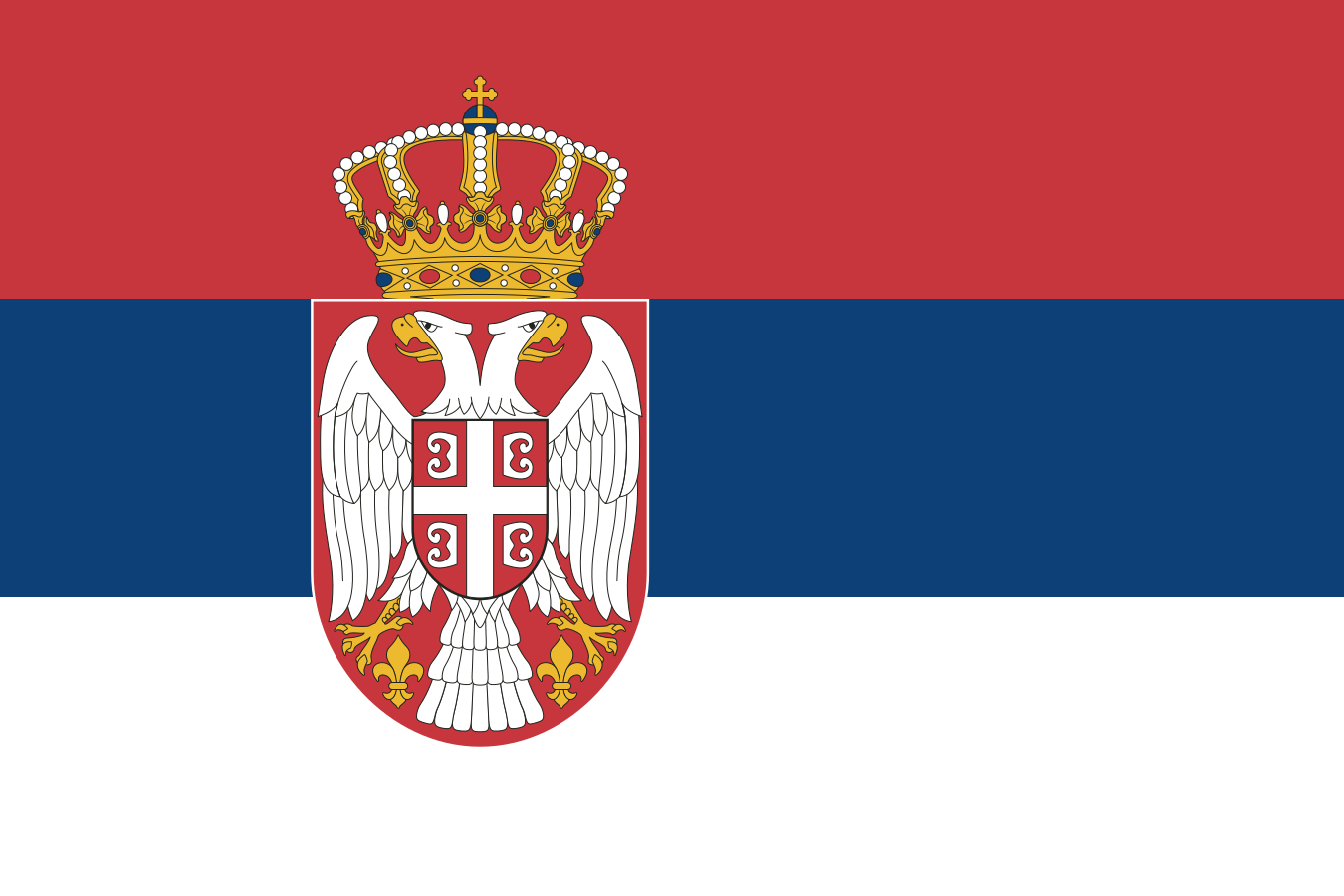
Southern Europe
Retire in Serbia
Serbia offers retirees a notably affordable cost of living—roughly 45% of US price levels—combined with a continental climate of mild winters and warm summers, and a life expectancy in line with Western Europe. Healthcare coverage is solid, and the country's cultural richness and proximity to Central Europe appeal to those seeking a slower pace without sacrificing access.
- Currency
- RSD
- Main language
- Serbian
- Population
- 7M
At a glance
Cost of living
~55% cheaper than the US
national price level vs the US · World Bank (PPP ÷ FX rate), 2025
How the numbers have moved
Serbia's economic trajectory is encouraging for retirees. GDP per capita (PPP) has grown steadily: from 15,546 international dollars in 2015 to 32,832 in 2024—more than doubling in a decade, signaling rising living standards and infrastructure investment. Life expectancy has also climbed, from 74.3 years in 2010 to 76 in 2024, with a notable dip during 2021 (likely COVID-related) that has since recovered. Population, however, has declined from 7.2 million in 2011 to 6.5 million in 2025—a slow but persistent shrinkage due to emigration and low birth rates. For a retiree, the economic growth and improving life expectancy are positive signs; the population decline reflects brain drain and may mean fewer young people to staff services, though it also eases housing and crowding pressures.
Multi-year series from the World Bank — the same indicators as above, over time.
Cost of living
Serbia is noticeably cheaper than the US overall—about 45% of the price level. Your money stretches furthest on housing and food; groceries, fresh produce, and local meat are affordable. Dining out, utilities, and transport remain inexpensive. Healthcare costs are low, though many retirees supplement public care with private insurance. The biggest swings come if you want imported Western goods or high-end urban dining, which cost considerably more.
Housing is the biggest budget win—rent and property purchases are substantially cheaper than the US, especially outside Belgrade's center. Groceries and fresh food are affordable, particularly if you shop local markets rather than imported supermarket brands. Dining out remains inexpensive, though upscale restaurants in Belgrade approach Western prices. Utilities (electricity, water, heating) are noticeably cheaper, though heating bills rise in winter if you prefer consistent warmth. Transport—buses, taxis, and fuel—is very cheap; a car is affordable to own and run. Healthcare costs are low if you use public care; private consultations and procedures cost more than public but far less than the US. Private insurance premiums are reasonable. Leisure—museums, theater, cinema, fitness—is affordable. The main cost pressures are imported goods (Western brands, specialty foods), high-end dining and accommodation in Belgrade, and heating/cooling if you're sensitive to temperature. Most retirees find their money stretches comfortably unless they insist on Western-standard imported luxuries.
Anchored to the national price level (~55% cheaper than the US) — World Bank (PPP ÷ FX rate) 2025.
Healthcare
Serbia's public healthcare system covers residents with a coverage index of 73, and life expectancy stands at 76 years. Foreigners and retirees can access public care, though the system is stretched and waiting lists exist for some specialists. Most foreign residents carry private health insurance alongside public enrollment, which gives faster access to doctors and private hospitals. English-speaking physicians are concentrated in Belgrade and larger cities; outside them, finding English speakers takes more effort. The system is improving but remains a mixed experience—public care is available and inexpensive, private care fills gaps.
As a foreign retiree in Serbia, you can access both public and private healthcare. Many retirees register with Serbia's public health system (Zdravstvena Zaštita), which covers inpatient care, basic outpatient visits, and some medications; enrollment requires residence status and proof of income or insurance. Public care is very affordable but involves waiting times—non-urgent appointments may take weeks, and the quality varies by facility. Private healthcare is widely available, faster, and still inexpensive by Western standards; private insurance (often purchased from international or local insurers) is common among expats and covers routine care, specialists, and sometimes dental and vision. Pharmacies are accessible; many medications available by prescription in the US are over-the-counter in Serbia, and costs are low. Finding an English-speaking physician is straightforward in Belgrade and Novi Sad (private clinics often cater to expats), harder in Niš and smaller towns. Serious emergencies are handled by public hospitals, which have improved but remain basic compared to Western facilities; many retirees with significant health needs arrange periodic care in a neighboring EU country or coordinate with home-country specialists via telemedicine. A practical approach: register with public healthcare, carry private insurance, and build a relationship with a trusted private doctor for routine care and preventive medicine.
Coverage index 73/100 (WHO 2023) · life expectancy 76 yrs (World Bank 2024). General information, not medical advice.
The five-factor profile
Each axis is a 0–100 score derived from the sourced indicators above and the climate normals below — nothing is hand-set. See the methodology for the exact formulas.
- Affordability77
- Healthcare73
- Climate comfort53
- Longevity68
- Prosperity68
Climate & seasons
Serbia has a continental climate with cold, damp winters and warm summers. In Belgrade and Novi Sad, January averages around −0.3 °C (often wet rather than heavily snowy) and July reaches 24.4 °C; annual precipitation is about 676 mm in Belgrade and 635 mm in Novi Sad. Niš in the south is slightly cooler overall (annual mean 10.7 °C) with January at −1.6 °C and July at 22.4 °C, and somewhat wetter at 704 mm annually. Springs are unpredictable—cool mornings warming into pleasant afternoons. Summers are warm and dry, making July and August comfortable for slower travel. Autumn is beautiful but brief; winter is grey, cold, and muddy rather than snowy, and can feel long. If you dislike cold, damp months, consider spending winter elsewhere.
| City | Annual mean | January | July | Rain / yr |
|---|---|---|---|---|
| Belgrade | 12.4°C | -0.3°C | 24.4°C | 676 mm |
| Novi Sad | 12.4°C | -0.3°C | 24.4°C | 635 mm |
| Niš | 10.7°C | -1.6°C | 22.4°C | 704 mm |
Source: NASA POWER (MERRA-2 climatology), long-term climatology.
A year in the life
Your year in Serbia shifts with four distinct seasons. January in Belgrade and Novi Sad hovers around −0.3 °C—grey, damp, muddy rather than snowy; Niš is slightly colder at −1.6 °C. Winters feel long and claustrophobic; heating bills rise, and outdoor life shrinks. February is similar; many retirees travel south or to warmer climates during these months. March and April bring unpredictable weather—some warm days, then sudden cold snaps—but energy returns as trees bud and cafés open their outdoor seating. May is lovely: mild, greening, and dry. June through August are the peak season—July reaches 24.4 °C in Belgrade and Novi Sad, 22.4 °C in Niš; summers are warm and mostly dry, perfect for slow travel, outdoor dining, and festivals. Some find late July and early August too warm for comfort, especially if you prefer cooler air. September is golden—warm but cooling, dry, and beautiful; many say it's the best month to be here. October turns wet and cool; November is grey; December is cold and damp, with holiday markets and festive atmosphere but the sense of winter closing in. A typical rhythm: settle in spring (April–May), enjoy the warm months slowly (June–September), and seriously consider leaving for December–February unless you genuinely enjoy cold, damp winters. Those with seasonal sensitivity might plan extended travels during the winter months.
The cities, up close
Belgrade, the capital on the Danube, is bustling, culturally rich, and the hub of expat life—walkable neighborhoods, restaurants, galleries, and nightlife, though traffic and noise are real. Novi Sad, 80 km north in Vojvodina, is smaller, greener, and quieter, with a more relaxed Austro-Hungarian feel and a tighter expat community; it suits those wanting urban amenities without Belgrade's intensity. Niš, in the south, is smaller still and more Serbian in character—less English, fewer expats, but cheaper and more authentic for those comfortable with language barriers and a slower rhythm. Each city has decent public transport; Belgrade and Novi Sad are walkable; Niš requires more patience with logistics. Choose based on whether you crave cultural buzz or prefer a gentler pace.
Retirement-visa path
Serbia's main retirement route is the long-stay residence permit for foreign nationals. You typically need to demonstrate stable income (around what a modest pension provides—verify the current threshold with your nearest consulate), proof of accommodation, travel health insurance, and a clean criminal record. The process begins at a Serbian embassy or consulate in your home country; applications are processed there, and you then enter Serbia on a short-stay visa before converting to a residence permit with the interior ministry once in-country. Timelines vary but generally take several weeks to a few months. Residence permits are often issued for one or two years and can be renewed; after several years of continuous residence, you may qualify for permanent residence. For specifics on current income thresholds, documentation requirements, and processing times, consult the official government immigration portal and your nearest Serbian embassy or consulate.
Step by step
Here is the concrete path to retirement residence in Serbia: (1) Gather proof of stable monthly income (around what a modest pension provides—verify the current threshold), proof of accommodation (lease or property deed), a valid passport, travel health insurance, and a clean criminal record check from your home country. (2) Apply at the Serbian embassy or consulate in your home country with these documents and a completed residence application form. (3) Attend a consulate appointment, provide biometric data, and submit to any medical screening they require. (4) Wait for the short-stay visa to be issued (typically several weeks); this allows you entry to Serbia. (5) Upon arrival, register with the local interior ministry or relevant police office to convert your short-stay visa into a formal residence permit; this involves submitting your documents again and may include a final background check. (6) Receive your residence permit (usually valid 1–2 years). (7) Before expiration, apply for renewal at the interior ministry in-country, building a record toward permanent residence eligibility. For current income thresholds, forms, processing times, and required documentation, visit the official Serbian government immigration portal and contact your nearest Serbian embassy or consulate—they hold the authoritative, up-to-date requirements.
Verified official source: www.mup.gov.rs
AI-drafted from official sources · pending human review · drafted 2026-07
Taxes
Serbia taxes residents on worldwide income, though non-residents are typically taxed only on Serbian-sourced income. Retirement income and foreign pensions are generally subject to Serbian tax if you become a tax resident, though the rate and treatment depend on your individual circumstances and any bilateral tax treaty between Serbia and your home country. Many retirees with foreign income find that treaties help avoid double taxation, but the rules are complex and vary case by case. A cross-border tax professional familiar with both Serbian and your home country's law is essential before you move—do not rely on general information alone.
Safety & advisories
Serbia is reasonably safe for retirees in major cities and tourist areas. Petty theft, pickpocketing, and car break-ins occur in Belgrade and other urban centers, particularly at night or in less-frequented neighborhoods; standard urban precautions (avoiding isolated areas after dark, watching belongings) apply. The healthcare system and emergency services function adequately, though not at Western speed. Tensions remain in Kosovo and southern regions, though they rarely affect everyday life in the main cities where expats live. For the most current security assessment, consult your home government's official travel advisory.
What retiring here is like
Retirement in Serbia has a slower, social pace. Life centers on family, food, and friendship; cafés and parks fill with people in good weather. Belgrade buzzes with culture, nightlife, and a young expat community; Novi Sad feels calmer and more livable; Niš is smaller and more provincial. Language is a real adjustment—Serbian uses Cyrillic, English is spoken mainly by younger people and in tourist zones, and daily life (shops, bureaucracy, doctors outside major cities) often requires Serbian or patience. Public transport is cheap and works reasonably well in cities. Many retirees find community through expat groups or by investing time in learning basic Serbian. The pace suits people who value affordability, history, and a less touristy European experience; it suits less those who need English fluency or fast-paced modern conveniences.
Who it tends to suit: Retirees drawn to affordable living, walkable towns, and a blend of Balkan history with modern European amenities, who are comfortable with Cyrillic and willing to navigate a less English-saturated environment than Western EU peers.
Frequently asked questions
- How much does it cost to retire in Serbia?
- Overall living costs in Serbia are ~55% cheaper than the US (World Bank PPP price level). Serbia is noticeably cheaper than the US overall—about 45% of the price level. Your money stretches furthest on housing and food; groceries, fresh produce, and local meat are affordable.
- What is healthcare like in Serbia?
- Serbia scores 73/100 on the WHO universal-health-coverage index. Serbia's public healthcare system covers residents with a coverage index of 73, and life expectancy stands at 76 years. Foreigners and retirees can access public care, though the system is stretched and waiting lists exist for some specialists.
- What is the climate in Serbia?
- Serbia averages 12.4°C year-round, ranging -0.3°C to 24.4°C (NASA POWER normals). Serbia has a continental climate with cold, damp winters and warm summers. In Belgrade and Novi Sad, January averages around −0.3 °C (often wet rather than heavily snowy) and July reaches 24.4 °C; annual precipitation is about 676 mm in Belgrade and 635 mm in Novi Sad.
- What retirement or long-stay visa does Serbia offer?
- Serbia does not currently offer a dedicated retirement visa program. Long-stay residence is available through a temporary residence permit for foreign nationals with sufficient means (typically tied to demonstrating financial stability or passive income), valid for up to one year and renewable. Requirements and exact income thresholds vary and are subject to change; you should verify current criteria with the Serbian Ministry of Interior or your nearest Serbian consulate.
- Is Serbia safe for retirees?
- Check your government's official travel advisory for Serbia before deciding to retire there; safety and security conditions can shift.
- Will I owe taxes if I retire in Serbia?
- Serbia taxes worldwide income for residents; consult a qualified tax professional in both your home country and Serbia to understand your obligations and any treaty benefits.
Where to look next
More in Southern Europe
Similar cost of living