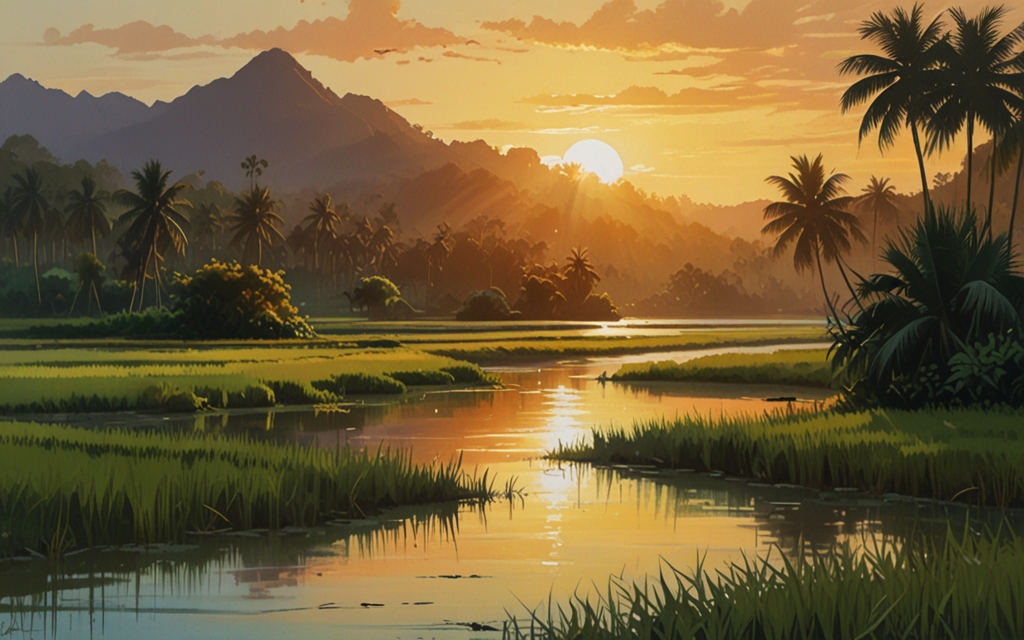

South Asia
Retire in Bangladesh
Bangladesh offers one of the world's lowest costs of living—about a quarter of US price levels—making your pension stretch far. The climate is warm year-round (average 25.6°C), though summers are hot and monsoon season brings heavy rain. Life expectancy stands at nearly 75 years, though the healthcare system is developing and you'll want to plan carefully for medical access.
- Currency
- BDT
- Main language
- Bengali
- Population
- 176M
At a glance
Cost of living
~75% cheaper than the US
national price level vs the US · World Bank (PPP ÷ FX rate), 2025
How the numbers have moved
Bangladesh's economy has grown steadily and strongly. GDP per capita (PPP) has nearly tripled from $2,834 in 2010 to $9,647 in 2024—a clear sign of rising prosperity and improving living standards. Life expectancy has risen from 68 years in 2010 to 74.9 in 2024, reflecting better healthcare and nutrition. The population has grown from 153.6 million in 2011 to 175.7 million in 2025, though growth is moderating. For a retiree, these trends are encouraging: the country is modernizing, healthcare is improving, and incomes are rising, which may put upward pressure on costs but also means better services and infrastructure.
Multi-year series from the World Bank — the same indicators as above, over time.
Cost of living
Bangladesh is very affordable relative to the US—at roughly one quarter the price level. Your money stretches furthest on housing, where rent for a comfortable apartment in Dhaka or Chittagong is low; groceries and local transport cost little, though imported goods and Western goods carry a premium. Utilities, dining at local restaurants, and domestic help (common for retirees) are all notably cheaper. Healthcare through the public system is inexpensive, though many expats use private clinics.
Housing is your biggest saving: rent for a comfortable two-bedroom apartment in a good neighborhood of Dhaka or Chittagong is very low by US standards. Groceries—local produce, rice, fish, and vegetables—are cheap; Western imports (cheese, certain grains) cost more. Dining out at local restaurants is inexpensive; Western restaurants in expat areas are pricier but still affordable. Transport via taxi or auto-rickshaw is very cheap; hiring a driver for part-time or full-time use is common and affordable for retirees. Utilities (electricity, water, internet) are modest. Private healthcare is inexpensive compared to the US, as are medications. Domestic help—cleaners, cooks, gardeners—is a realistic budget item and very affordable. Leisure (cinema, local tours, hobby classes) costs little. Your biggest variables are whether you choose to eat mainly locally or import Western foods, and how much private healthcare and insurance you use.
Anchored to the national price level (~75% cheaper than the US) — World Bank (PPP ÷ FX rate) 2025.
Healthcare
Bangladesh has a healthcare coverage index of 54, and life expectancy of 74.9 years—solid for the region, though the system requires navigation. Public healthcare exists but is often crowded; most foreign residents and retirees use a mix of private clinics and private health insurance, which is affordable. English-speaking doctors are available in larger cities, especially Dhaka and Chittagong, though outside the major urban centers you may face language barriers. You'll want to verify your eligibility for any public benefits and establish a relationship with a private clinic early.
Foreign retirees in Bangladesh typically access care through private clinics and hospitals rather than the public system, which is under-resourced and often crowded. You can purchase private health insurance (available from both Bangladeshi and international insurers), which is affordable and gives you access to better facilities and English-speaking doctors in Dhaka and Chittagong. Major private hospitals in Dhaka—such as those in the Gulshan and Banani districts—offer modern diagnostics and many doctors trained abroad; waiting times are generally short for private patients. Outside the capital, private care is available but fewer doctors speak fluent English, and you may need to travel to Dhaka for specialist care. Prescriptions can be filled at pharmacies, though you should verify that your medications are available in Bangladesh (bring a letter from your doctor with the generic names). The public healthcare system is free or very low-cost for residents, but quality and availability vary widely. Most expat retirees use a combination: private insurance for acute care and routine check-ups, supplemented by public facilities for less critical needs if cost is a priority. Register with a private clinic early so you have an established doctor who knows your history.
Coverage index 54/100 (WHO 2023) · life expectancy 74.9 yrs (World Bank 2024). General information, not medical advice.
The five-factor profile
Each axis is a 0–100 score derived from the sourced indicators above and the climate normals below — nothing is hand-set. See the methodology for the exact formulas.
- Affordability97
- Healthcare54
- Climate comfort81
- Longevity65
- Prosperity43
Climate & seasons
Bangladesh is tropical and humid with a distinct monsoon cycle. Dhaka and Chittagong have January temperatures around 17–18°C (cool, dry, and pleasant), rising to July temperatures of 28–29°C with heavy humidity and frequent rain. Sylhet, further northeast, is slightly cooler in winter (17°C) but receives the most rainfall—over 3,700 mm annually compared to Dhaka's 2,225 mm. The monsoon (June to September) brings intense rainfall across all cities; the dry season (November to February) is the most comfortable for daily life, while March to May grows steadily hotter and more oppressive before the rains arrive.
| City | Annual mean | January | July | Rain / yr |
|---|---|---|---|---|
| Dhaka | 25.6°C | 17.7°C | 28.3°C | 2,225 mm |
| Chittagong | 25.5°C | 18.4°C | 27.9°C | 3,061 mm |
| Sylhet | 24.5°C | 17.1°C | 28°C | 3,708 mm |
Source: NASA POWER (MERRA-2 climatology), long-term climatology.
A year in the life
November to February is the golden season: Dhaka and Chittagong enjoy dry, mild weather with January temperatures around 17–18°C, ideal for exploring, outdoor activities, and socializing. March to May grows progressively hotter and more humid—Dhaka and Chittagong approach 29–30°C, with oppressive humidity by May; many retirees slow their pace indoors during these months or travel to cooler locales. June to September is the monsoon: heavy, persistent rainfall (especially in Sylhet with its 3,700 mm annual total) brings green landscapes but limits outdoor movement and increases petty health concerns like waterborne illness; indoors and local rhythms dominate. September to October is shoulder season, as the rains ease and temperatures start to moderate. Many retirees plan regional travel or trips home during the hot season (April–May) and embrace the quiet, cultural rhythm of the monsoon. The dry season (November to February) draws festivals, social gatherings, and visiting friends and family.
The cities, up close
Dhaka, the capital, is dense, congested, and the country's economic and cultural hub—best suited to retirees comfortable with urban buzz and who value access to hospitals, restaurants, and services. Chittagong, the main port city on the Bay of Bengal, is slightly more relaxed, with a coastal feel and growing expat presence; it's a good middle ground between urban amenities and breathing room. Sylhet, in the northeast, is smaller, greener, and less touristy—quieter for those seeking calm and closer to nature, though it offers fewer services and a smaller expat footprint.
Retirement-visa path
Bangladesh does not have a dedicated retirement visa program like some Southeast Asian countries. The main long-stay route is a Business Visa (renewable) or Tourist Visa extensions, both of which require sponsorship or accommodation letters. Some retirees obtain visas through employment (language teaching, consulting) or by leasing property and securing local sponsorship. You'll need to demonstrate financial means—no specific amount is publicly codified, but verify the current threshold with the Bangladesh immigration authority. The process typically takes several weeks and involves an application at a Bangladesh embassy or consulate in your home country, followed by conversion to a residence permit after arrival. Contact your nearest Bangladesh embassy or consulate, and consult the official Bangladesh immigration portal for current requirements.
Step by step
1. Gather proof of financial means (savings, pension statements, or proof of ongoing income) and determine your visa route—Business Visa, Tourist Visa extension, or employment-based sponsorship. 2. Contact your nearest Bangladesh embassy or consulate and request the visa application package and current requirements; verify the financial threshold that applies to your situation. 3. Complete the application form, provide your passport, photographs, accommodation letter (from a host in Bangladesh or a hotel), and proof of funds. 4. Submit at the embassy/consulate; processing typically takes several weeks. 5. Receive your entry visa (usually valid for a set period). 6. Arrive in Bangladesh and report to the local immigration office to apply for a residence permit (if applicable to your visa type); this often involves biometrics and a medical check. 7. Renew your residence permit annually or as required, working toward long-term status if available under your visa category. Consult the official Bangladesh immigration portal for current regulations and your nearest embassy or consulate for specific guidance; this is general information, not immigration advice.
Verified official source: visa.gov.bd
AI-drafted from official sources · pending human review · drafted 2026-07
Taxes
Bangladesh taxes residents on worldwide income, but foreign retirees' treatment depends on residence status and whether you hold a valid residence permit. Many bilateral tax treaties exist to avoid double taxation. Since your situation will depend on your home country's treaties, your visa status, and Bangladesh's classification of your income, you must consult a cross-border tax professional before moving. General principle: foreign-sourced income is often taxable if you're resident in Bangladesh for more than 182 days in a tax year.
Safety & advisories
Dhaka and Chittagong are busy, crowded cities with petty theft and traffic accidents being the main everyday concerns rather than violent crime. Expat and retiree communities tend to live in quieter residential neighborhoods where day-to-day safety is manageable with normal urban caution—avoid displaying wealth, use trusted transport, and be aware of your surroundings. Healthcare facilities in the private sector are reliable, but you should have comprehensive insurance and know where quality care is located. Your own government's official travel advisory will give you the most current picture of any specific regional or political concerns.
What retiring here is like
Retired life in Bangladesh centers on the rhythms of Dhaka or Chittagong, where expat communities are small but present, and a modest budget affords a comfortable pace. Daily life is slower than in the West; many retirees enjoy domestic help, regular meals at restaurants, and exploration of local culture. Bengali is the working language; English is spoken in business and among younger professionals, but learning basic Bengali opens doors. Getting around the cities means taxis, auto-rickshaws, or hired drivers; walking is possible but traffic is chaotic. The expat social scene is quieter than in Thailand or Vietnam, so you'll need to be self-directed about community. Adjustment takes time—the pace, noise, and humidity are real, but retirees who embrace local rhythm and accept the pace often thrive.
Who it tends to suit: Retirees with modest pensions, strong ties to Bengali culture or family, comfort navigating a crowded and sometimes chaotic urban environment, and realistic expectations about healthcare infrastructure.
Frequently asked questions
- How much does it cost to retire in Bangladesh?
- Overall living costs in Bangladesh are ~75% cheaper than the US (World Bank PPP price level). Bangladesh is very affordable relative to the US—at roughly one quarter the price level. Your money stretches furthest on housing, where rent for a comfortable apartment in Dhaka or Chittagong is low; groceries and local transport cost little, though imported goods and Western goods carry a premium.
- What is healthcare like in Bangladesh?
- Bangladesh scores 54/100 on the WHO universal-health-coverage index. Bangladesh has a healthcare coverage index of 54, and life expectancy of 74.9 years—solid for the region, though the system requires navigation. Public healthcare exists but is often crowded; most foreign residents and retirees use a mix of private clinics and private health insurance, which is affordable.
- What is the climate in Bangladesh?
- Bangladesh averages 25.6°C year-round, ranging 17.7°C to 29.6°C (NASA POWER normals). Bangladesh is tropical and humid with a distinct monsoon cycle. Dhaka and Chittagong have January temperatures around 17–18°C (cool, dry, and pleasant), rising to July temperatures of 28–29°C with heavy humidity and frequent rain.
- What retirement or long-stay visa does Bangladesh offer?
- Bangladesh does not have a dedicated retirement visa. Long-stay residence is primarily available through employment, business investment, or family sponsorship. Some retirees enter on tourist visas and apply for extension, but this is not a formal pathway.
- Is Bangladesh safe for retirees?
- Consult your government's official travel advisory (e.g. US State Department, UK Foreign Office) for current security, health, and safety guidance for your location and personal circumstances.
- Will I owe taxes if I retire in Bangladesh?
- Bangladesh taxes residents on worldwide income above certain thresholds; consult a tax professional in Bangladesh and your home country before moving, as obligations vary by citizenship and residency status.
Where to look next
More in South Asia

Similar cost of living